1 · Disks & Ovals — the colorful crowd
Butterflyfish, angelfish & surgeonfish — the flat, round, brightly painted fish that hug the rocks.
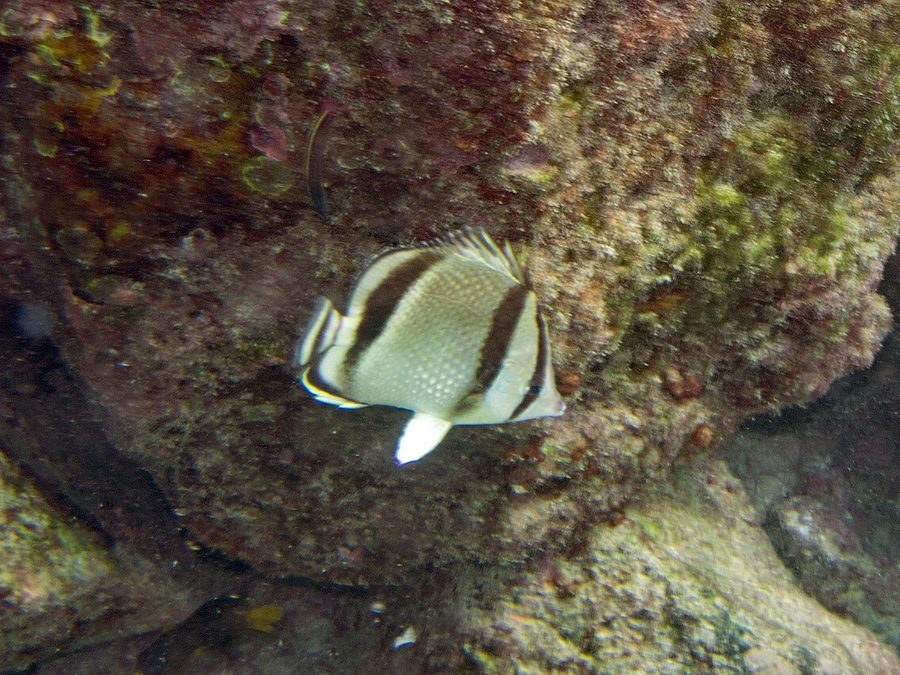
Threebanded Butterflyfish
Chaetodon humeralis
Costa Rica's most common butterflyfish — a silvery, disk-shaped fish crossed by dark bars, usually seen gliding in pairs as it picks along the rocks.
5 fun facts →
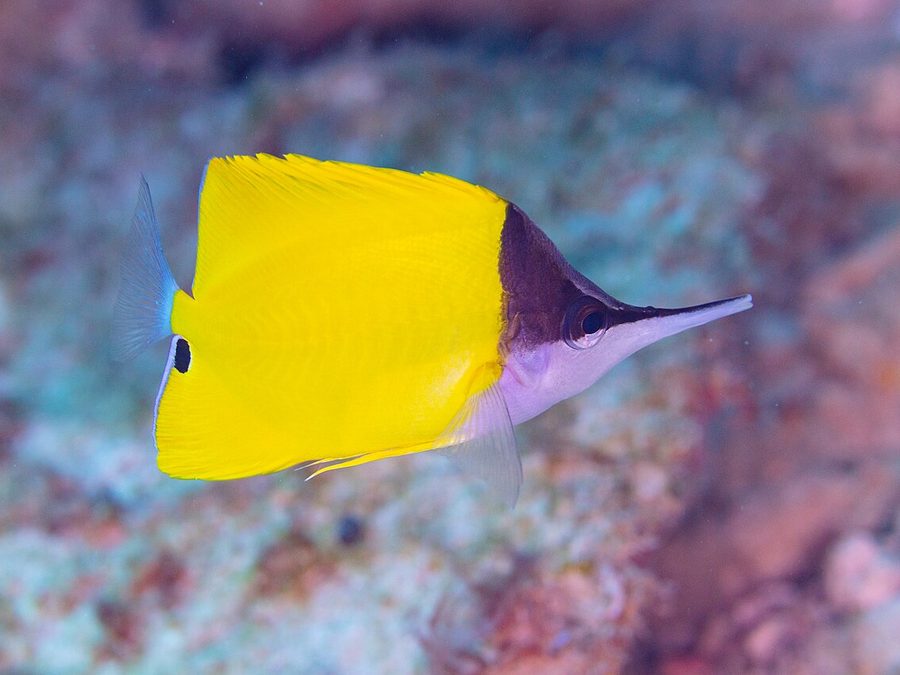
Longnose Butterflyfish
Forcipiger flavissimus
Bright lemon-yellow with a long, tweezer-like snout it uses to pluck tiny food out of reef crevices. Hard to miss against the dark rocks.
5 fun facts →
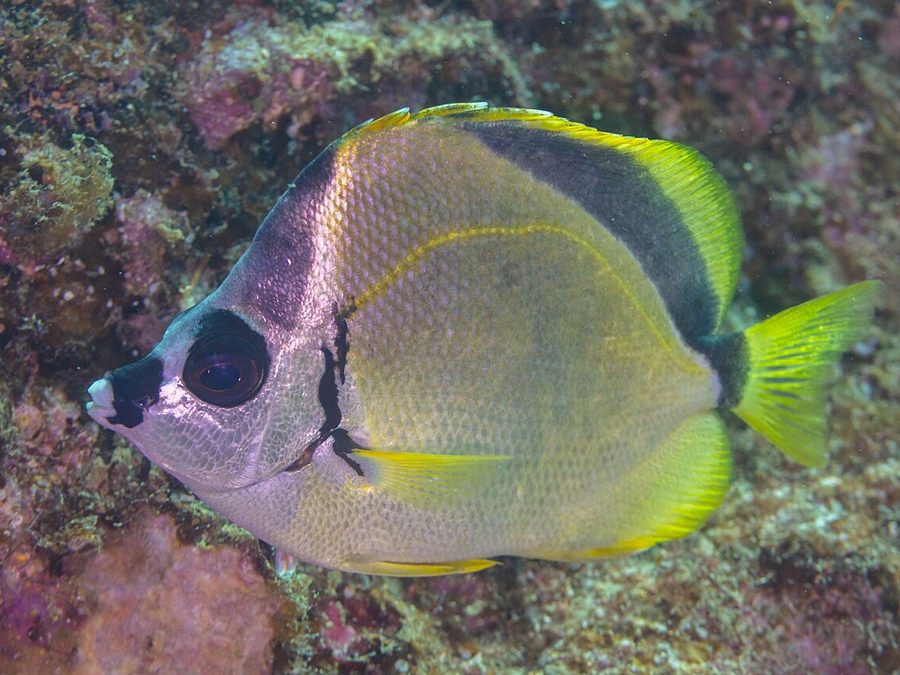
Barberfish
Johnrandallia nigrirostris
A pale butterflyfish with a dark "mask" and tail bar. It runs cleaning stations, nibbling parasites off bigger fish that line up to wait their turn.
5 fun facts →
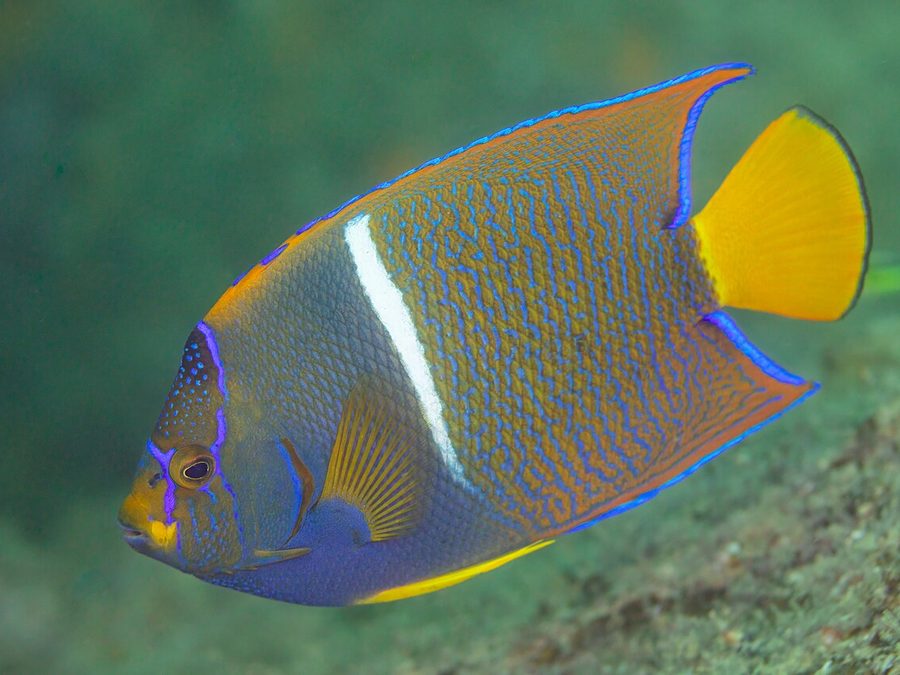
King Angelfish
Holacanthus passer
A showstopper — deep blue-black body crossed by a single bright white bar, with a golden tail. One of the signature angelfish of the Eastern Pacific.
5 fun facts →
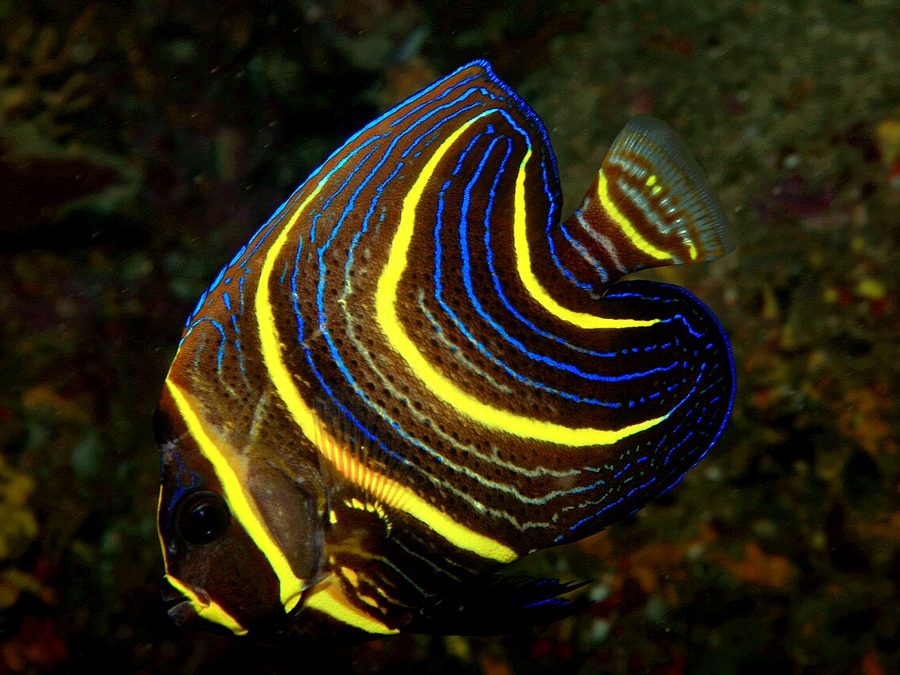
Cortez Angelfish
Pomacanthus zonipectus
Adults are gray and gold with sweeping bands; young ones are jet-black with electric yellow-and-blue stripes. Spotting a juvenile is a real treat.
5 fun facts →
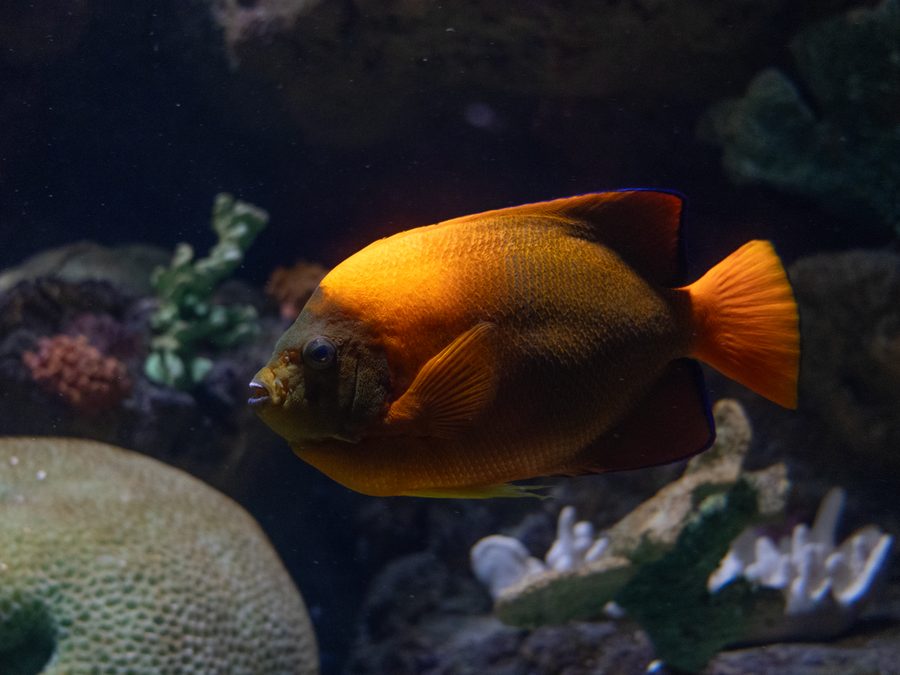
Clarion Angelfish
Holacanthus clarionensis
A warm orange-brown angelfish from the offshore islands — rarer and prized, so every sighting feels like a small reward.
5 fun facts →
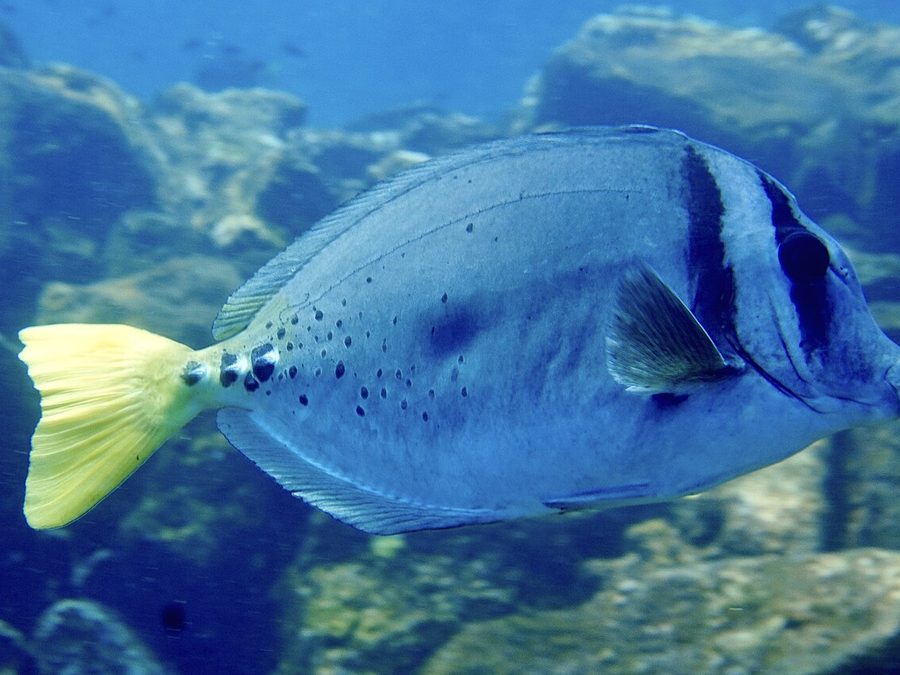
Yellowtail Surgeonfish
Prionurus punctatus
Named for its bright yellow tail. Surgeonfish carry a tiny scalpel-sharp spine near the tail — lovely to watch, best admired without touching.
5 fun facts →
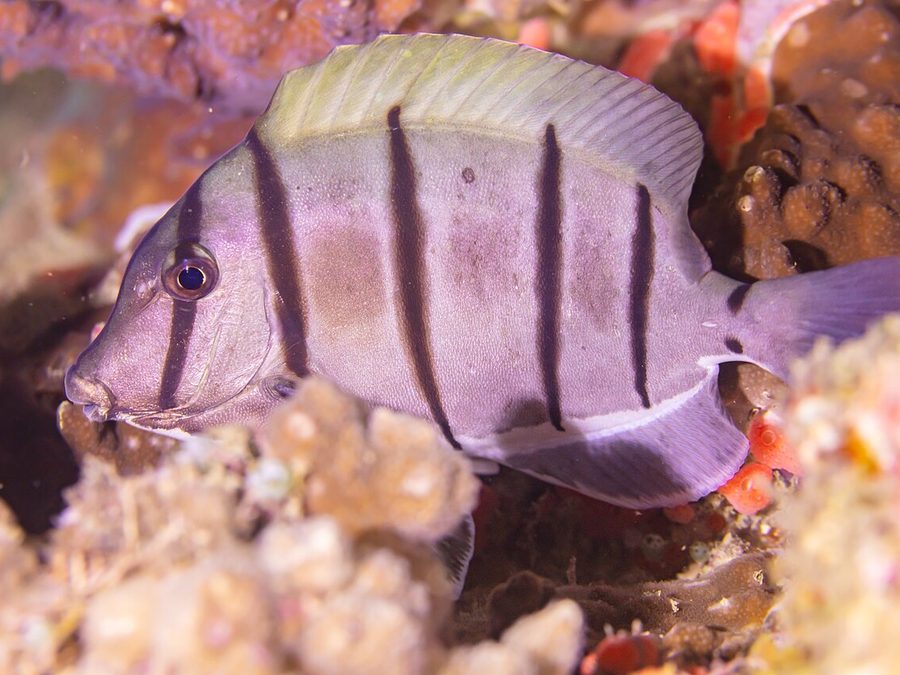
Convict Tang
Acanthurus triostegus
A small silvery surgeonfish wearing six dark "prison" bars. They graze algae off the rocks in busy, roving groups.
5 fun facts →
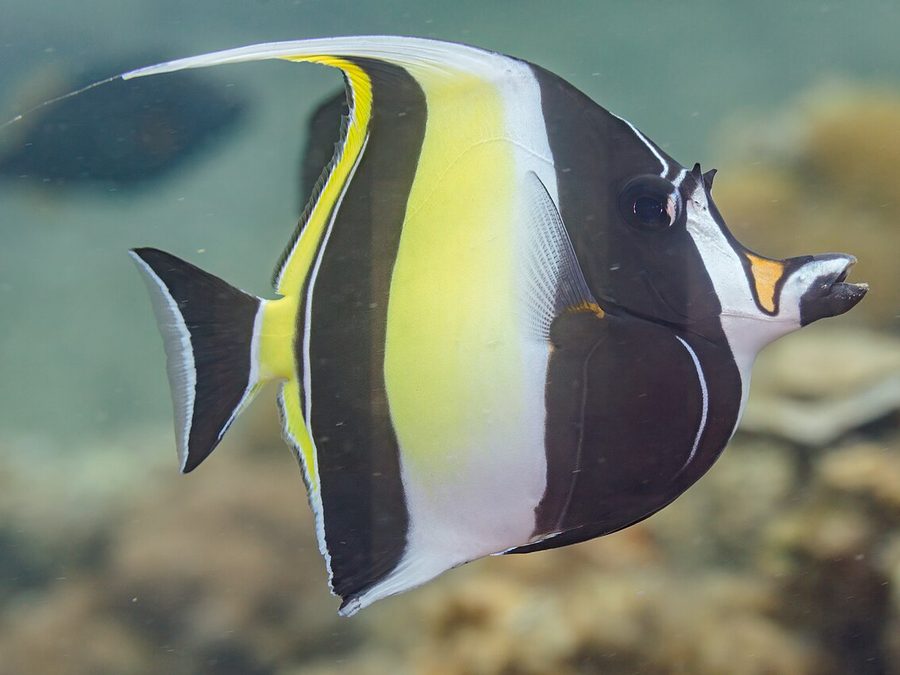
Moorish Idol
Zanclus cornutus
Unmistakable — bold black, white and yellow bands and a long trailing dorsal streamer. One of the most elegant fish on the reef.
5 fun facts →
Representative photos of each Eastern Pacific species, via Wikimedia Commons under Creative Commons licenses (CC BY / CC BY-SA): Diego Delso, Paul & Jill, László Ilyés, Coughdrop12, and the Guido & Carrara family. What you actually see varies by day, season and tide.
2 · Silvery Fish — the open-water shimmer
Jacks, barracuda, mullet and needlefish — fast, mirror-bright fish that cruise the sandy edges and open water just off the reef.
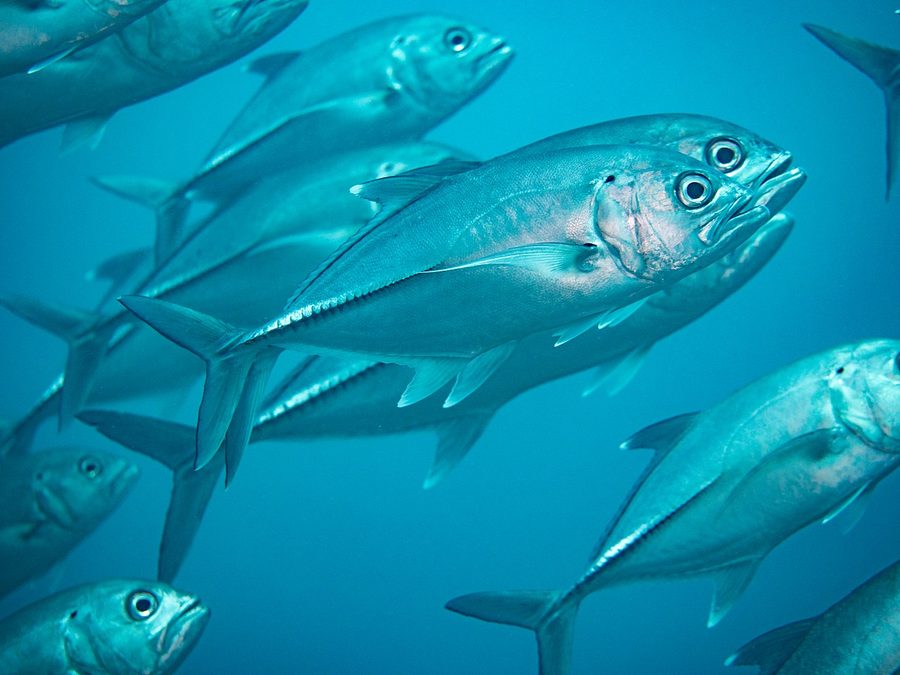
Bigeye Trevally
Caranx sexfasciatus
Silver jacks with big eyes that gather in slow, wheeling schools. Watching a tight ball of them turn as one is a highlight of any swim.
5 fun facts →
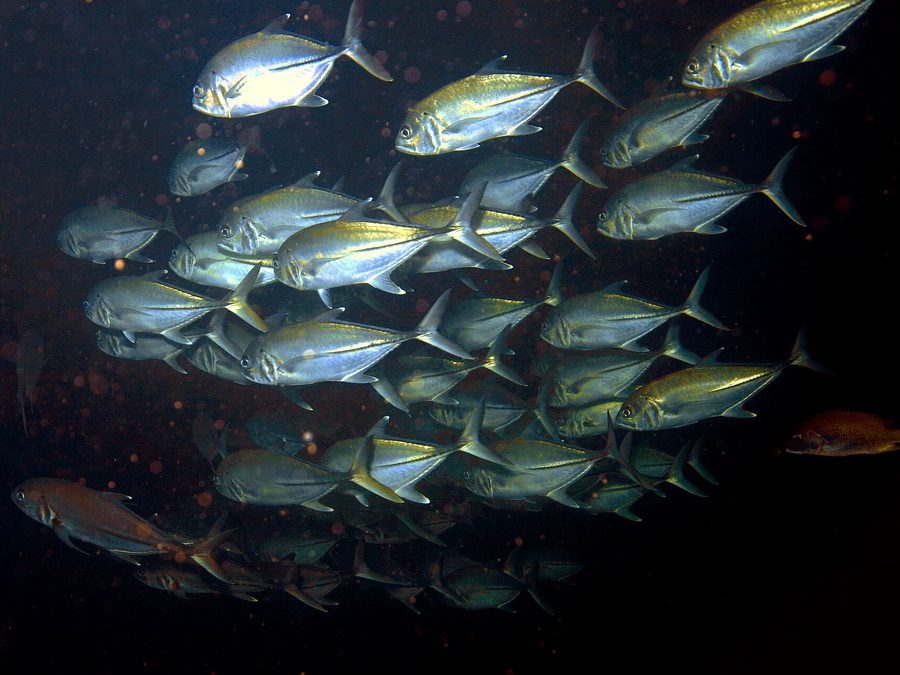
Pacific Crevalle Jack
Caranx caninus
A muscular, deep-bodied silver jack that hunts baitfish in fast-moving schools. When they charge a bait ball, the water boils.
5 fun facts →
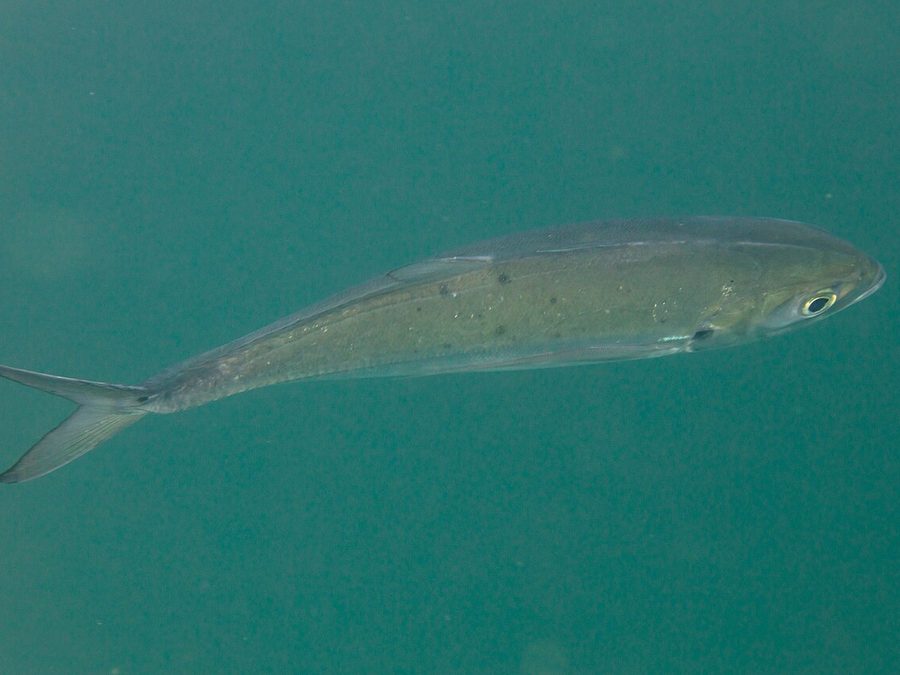
Green Jack
Caranx caballus
Slender and blue-green along the back, these jacks stream over the reef in quick, shifting schools that catch the light.
5 fun facts →
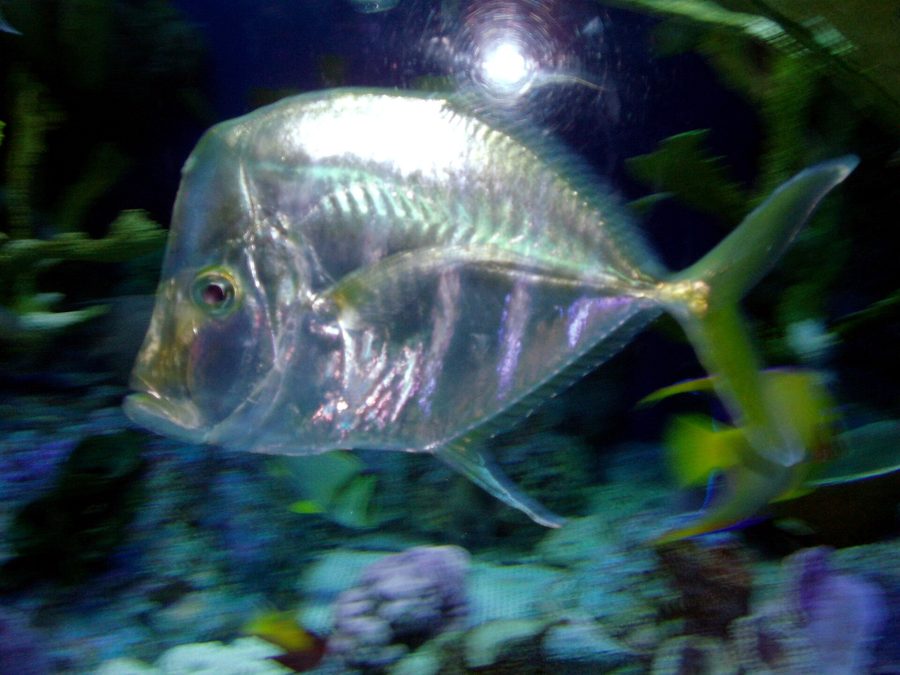
Pacific Lookdown
Selene brevoortii
Thin as a coin and bright as a mirror, with a steep, sloping forehead that gives it a permanently downcast "look." Dazzling in sunlight.
5 fun facts →
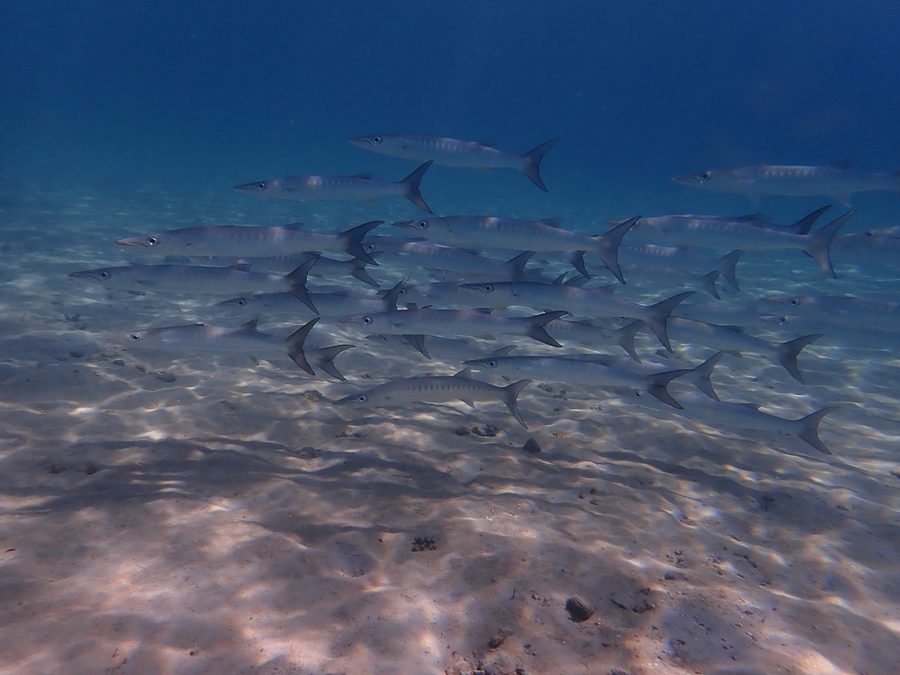
Mexican Barracuda
Sphyraena ensis
A slender silver ambush hunter that hangs almost motionless in the water. Toothy and dramatic to see, but calm and no cause for alarm.
5 fun facts →
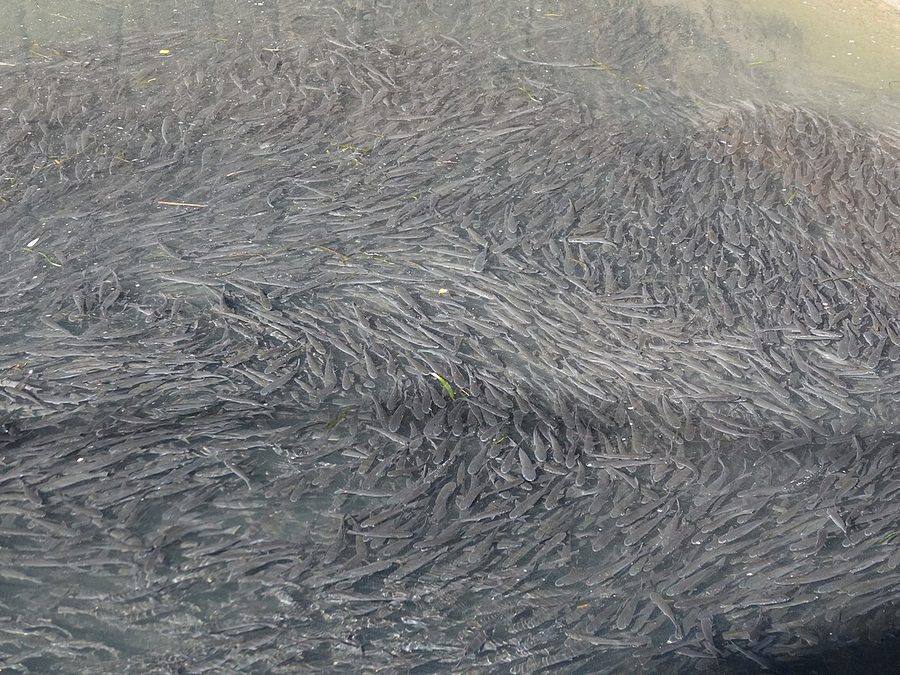
Striped Mullet
Mugil cephalus
Hardy silver fish that ripple across the shallows in big, easygoing schools and often leap clear of the surface for no obvious reason.
5 fun facts →
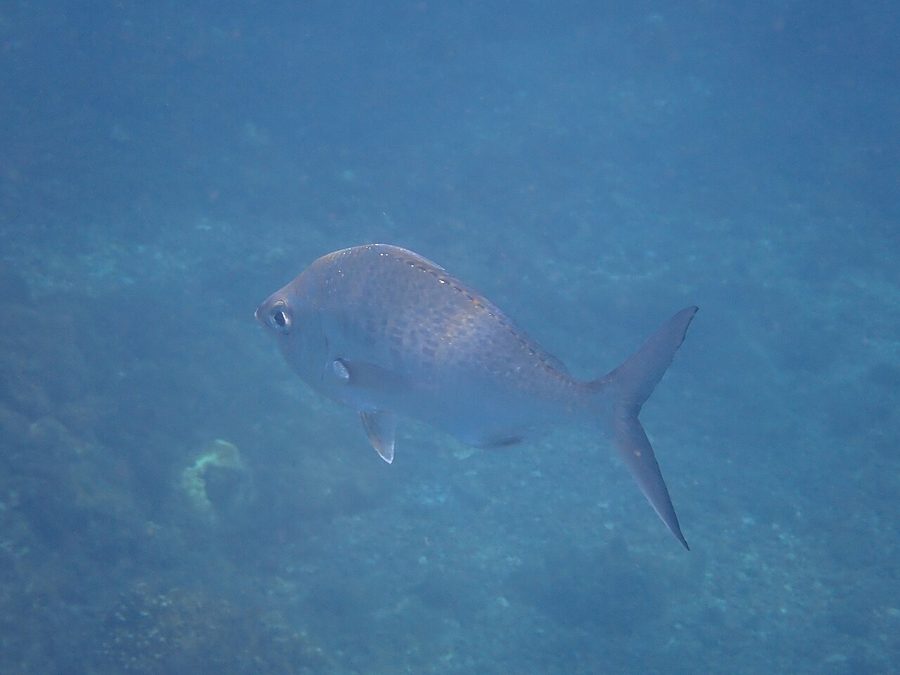
Yellowfin Mojarra
Gerres cinereus
A bright silver fish with yellow-tinged fins that sifts the sandy bottom for small morsels, puffing little clouds of sand as it feeds.
5 fun facts →
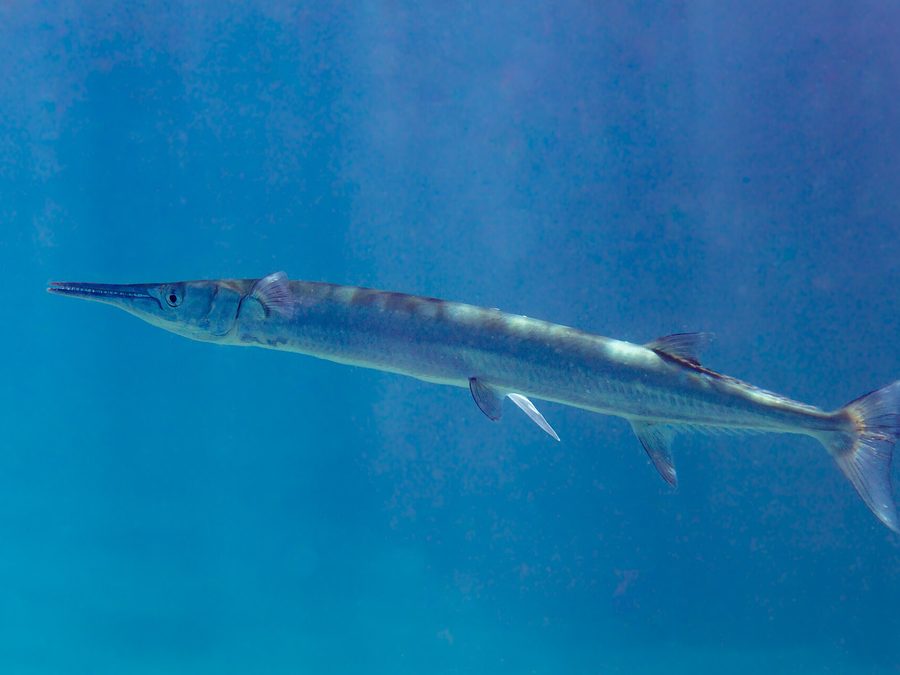
Pacific Needlefish
Tylosurus fodiator
Long, pencil-thin fish with a needle beak that hover right at the surface. Easy to miss until the light catches their silver line.
5 fun facts →
Representative photos of each Eastern Pacific species, via Wikimedia Commons under Creative Commons licenses (CC BY / CC BY-SA): Rickard Zerpe, László Ilyés, Diego Delso, George Berninger, Kees Groenendijk and Phonon.b. What you actually see varies by day, season and tide.
3 · Sloping-Head Fish — snappers & grunts
The tapered, big-lipped fish that hover near rocks and ledges in loose schools — from golden snappers to the grunting porkfish.
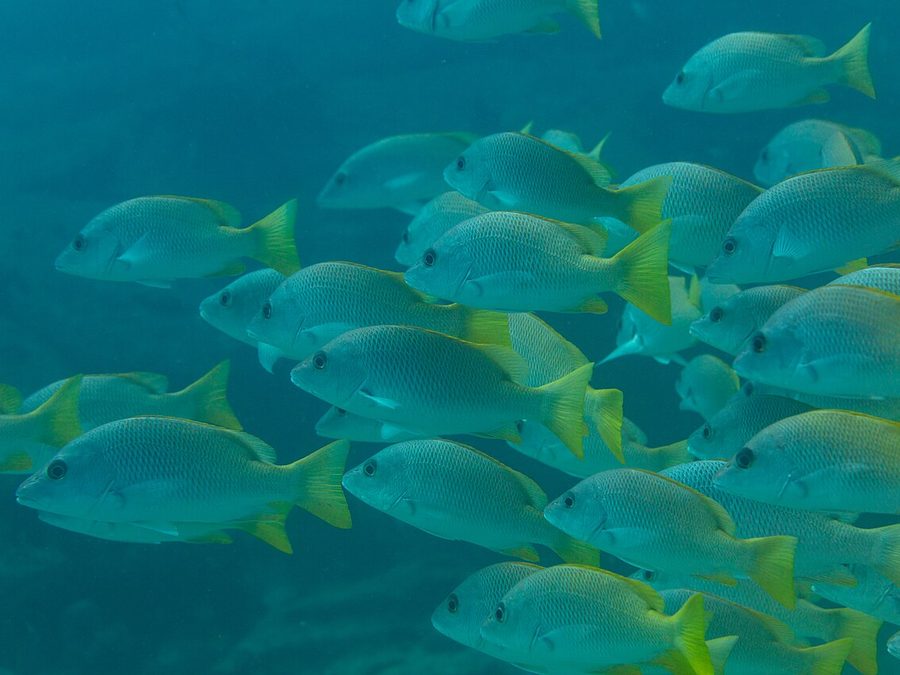
Yellow Snapper
Lutjanus argentiventris
Silver up front, bright golden toward the tail. One of the most common reef fish on the Pacific coast, usually hovering near rocks and ledges.
5 fun facts →
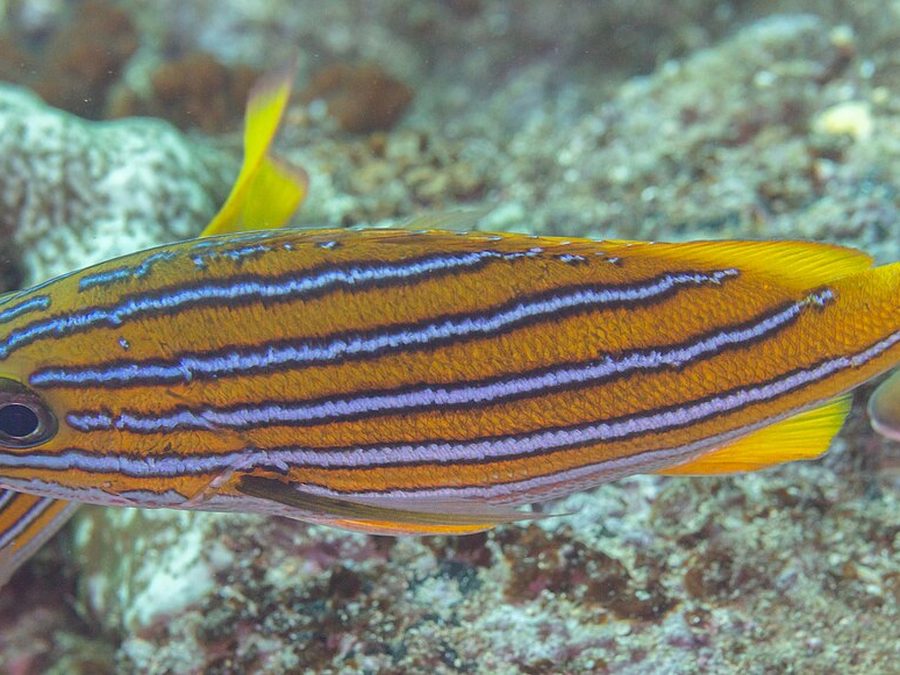
Blue-and-Gold Snapper
Lutjanus viridis
Electric blue lines on a golden body, schooling tightly near rocky outcrops. One of the most recognizable fish on the reef.
5 fun facts →
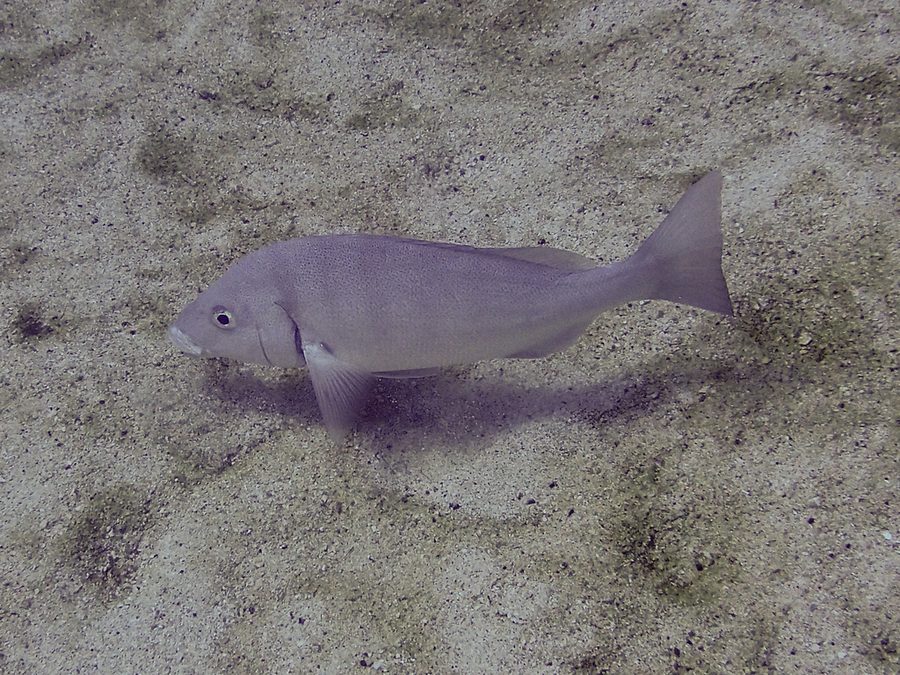
Pacific Dog Snapper
Lutjanus novemfasciatus
The reef's heavyweight — a big, broad-shouldered snapper with large dog-like teeth. Often seen alone near deeper rocks and caves.
5 fun facts →
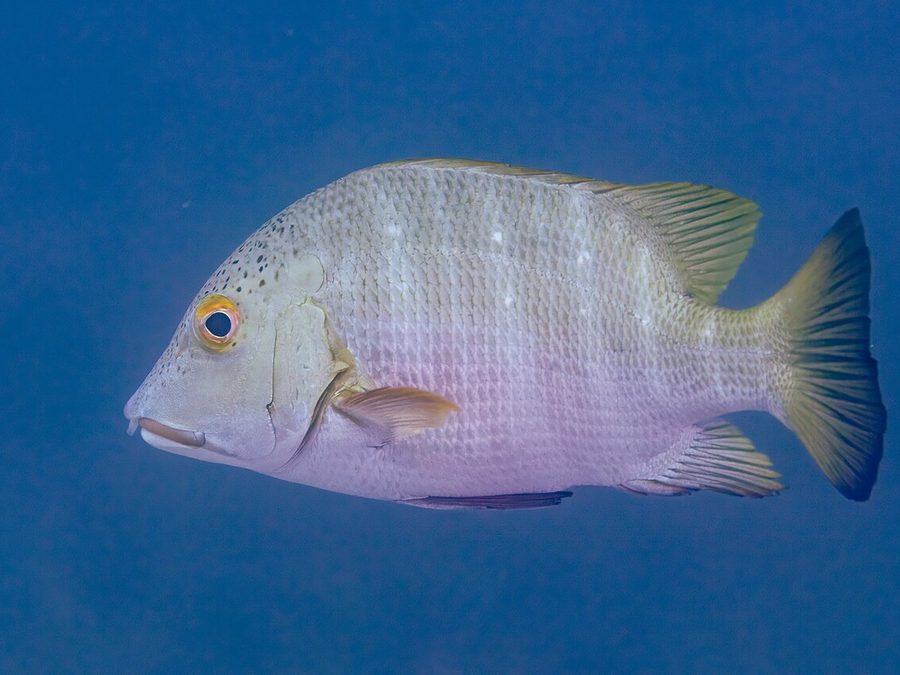
Barred Pargo
Hoplopagrus guentherii
A stocky, handsome snapper found only in the Eastern Pacific. Younger ones show pale bars; adults hold close to a favorite ledge.
5 fun facts →
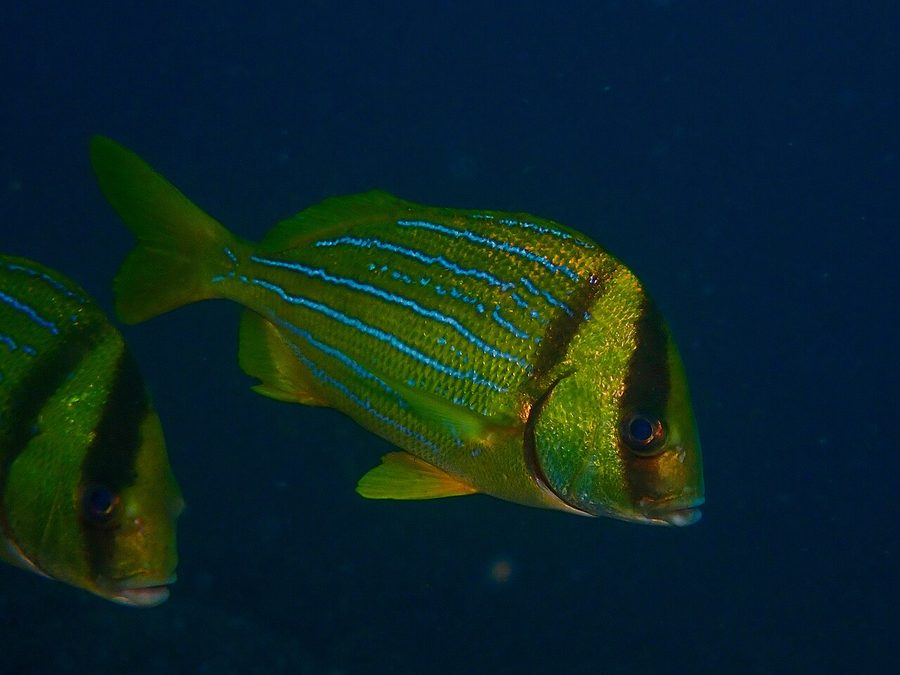
Panamic Porkfish
Anisotremus taeniatus
Two bold black bars on a silver face, a body striped in yellow. One of the most photogenic grunts on the reef.
5 fun facts →
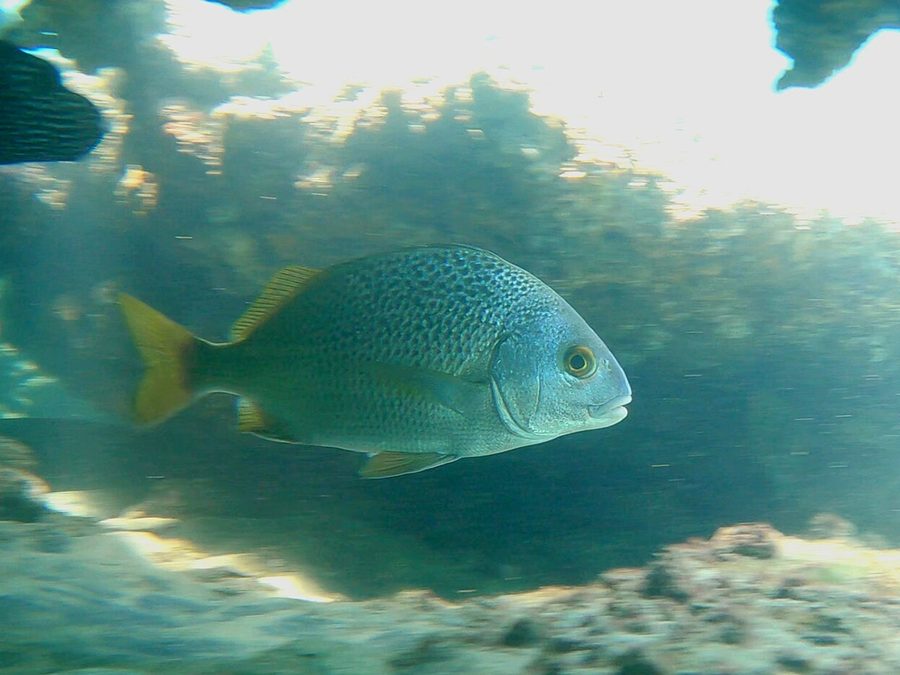
Burrito Grunt
Anisotremus interruptus
A solid, silvery grunt with a brassy sheen that works the base of the rocks. Quiet-looking, but it really does grunt.
5 fun facts →
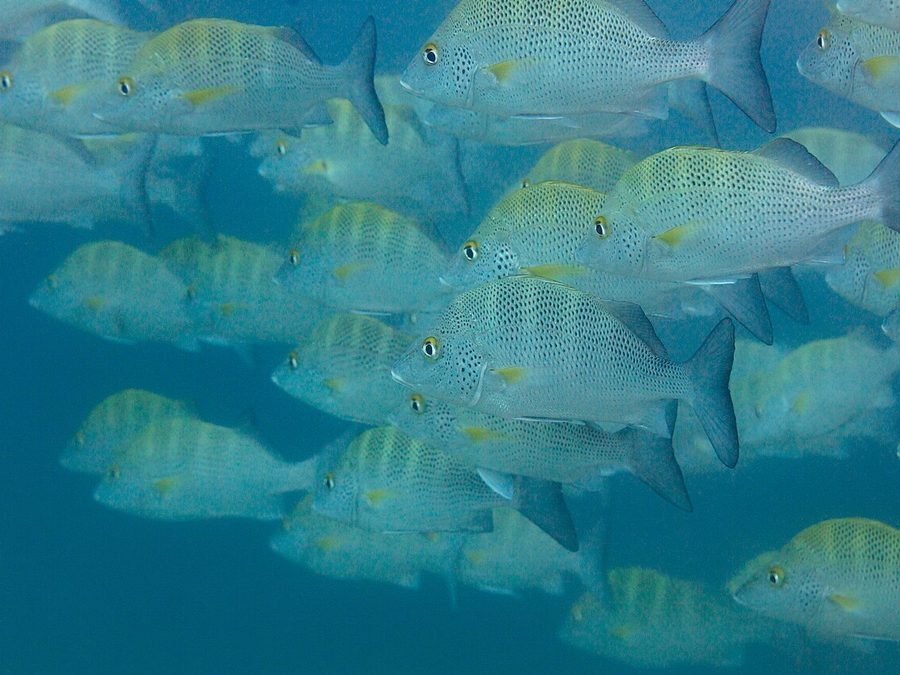
Graybar Grunt
Haemulon sexfasciatum
One of the biggest grunts here, hanging in large shimmering schools near the reef. The whole group shifts and reforms as you swim through.
5 fun facts →
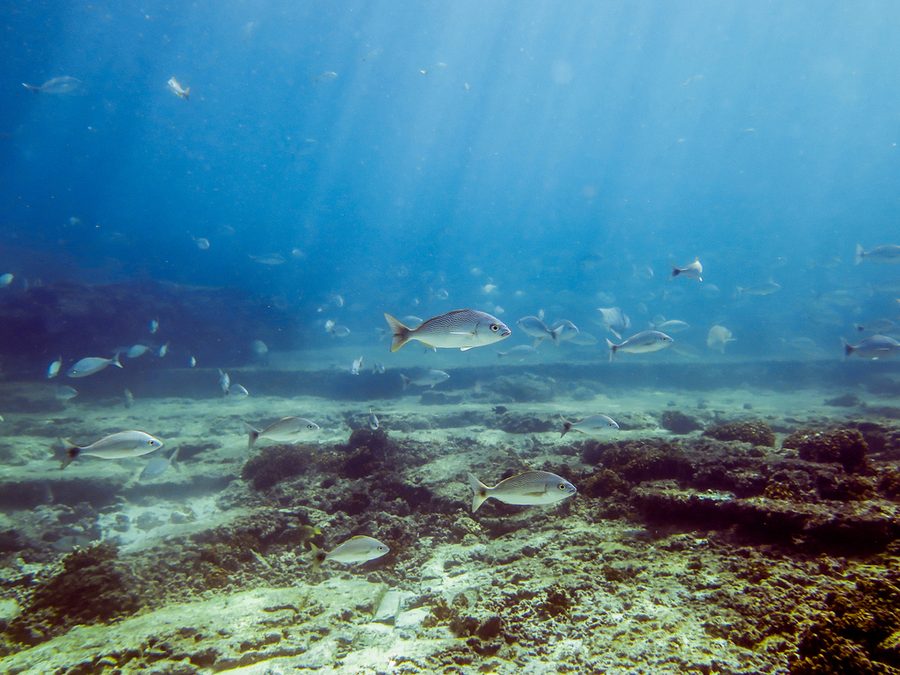
Latin Grunt
Haemulon steindachneri
Silvery with fine wavy lines and a dark smudge near the tail. Often mixed into larger grunt schools drifting over the rocks.
5 fun facts →
Representative photos of each Eastern Pacific species, via Wikimedia Commons under Creative Commons licenses (CC BY / CC BY-SA): Diego Delso, Julien Renoult, Dan Schofield, Alberto Alcalá and rmcminds. What you actually see varies by day, season and tide.
4 · Damselfish & Small Ovals — the feisty little locals
Small, bold reef fish that farm algae and guard their turf — plus the schooling chromis that hover in midwater clouds.
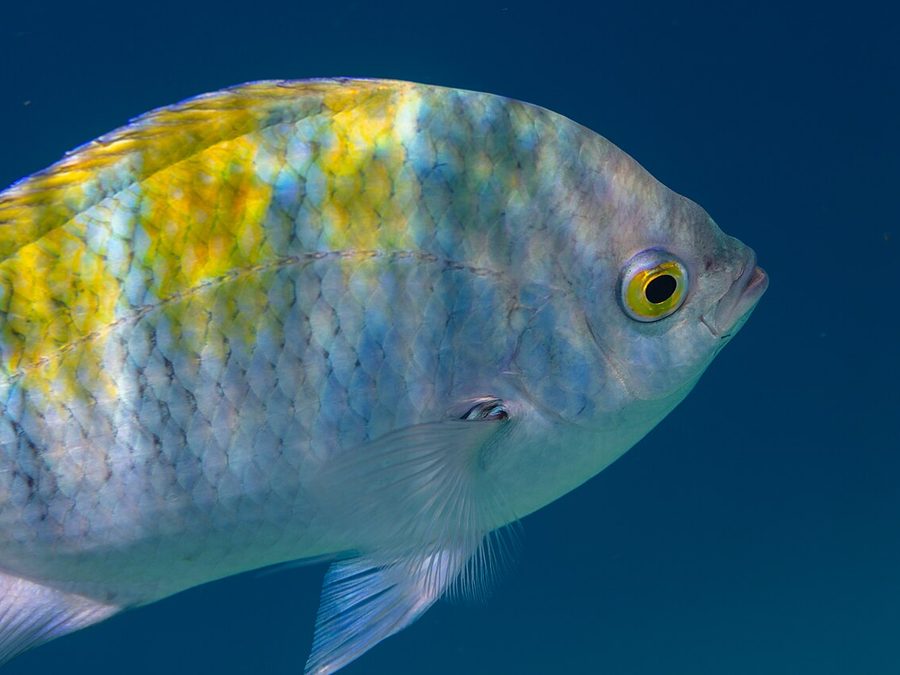
Panamic Sergeant Major
Abudefduf troschelii
The bold black-and-yellow striped fish you'll likely meet first — common, curious, and all over the rocks. Often the first fish to greet snorkelers.
Read the guide →
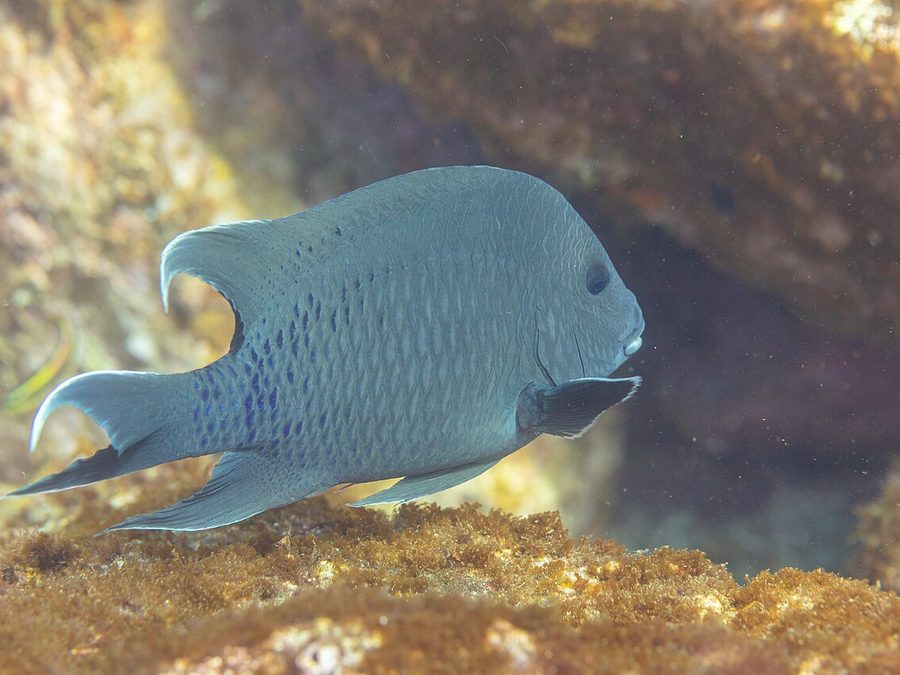
Giant Damselfish
Microspathodon dorsalis
The biggest damselfish here — dark and chunky, and fearless for its size. Young ones glow with electric-blue spots.
5 fun facts →
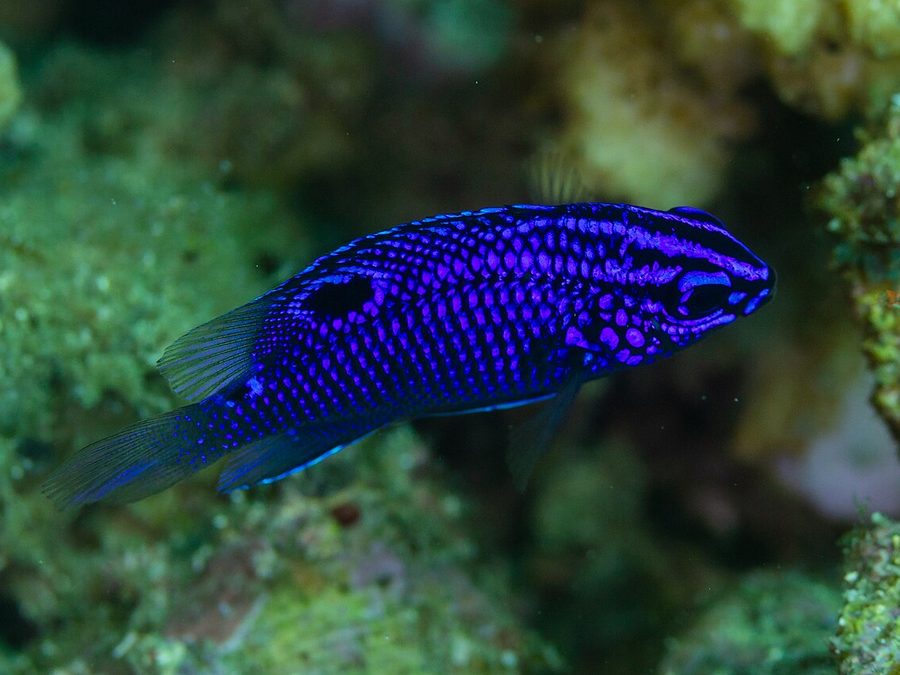
Cortez Damselfish
Stegastes rectifraenum
A small, busy reef guardian. Adults are dusky brown; juveniles are deep blue with glowing neon lines.
5 fun facts →
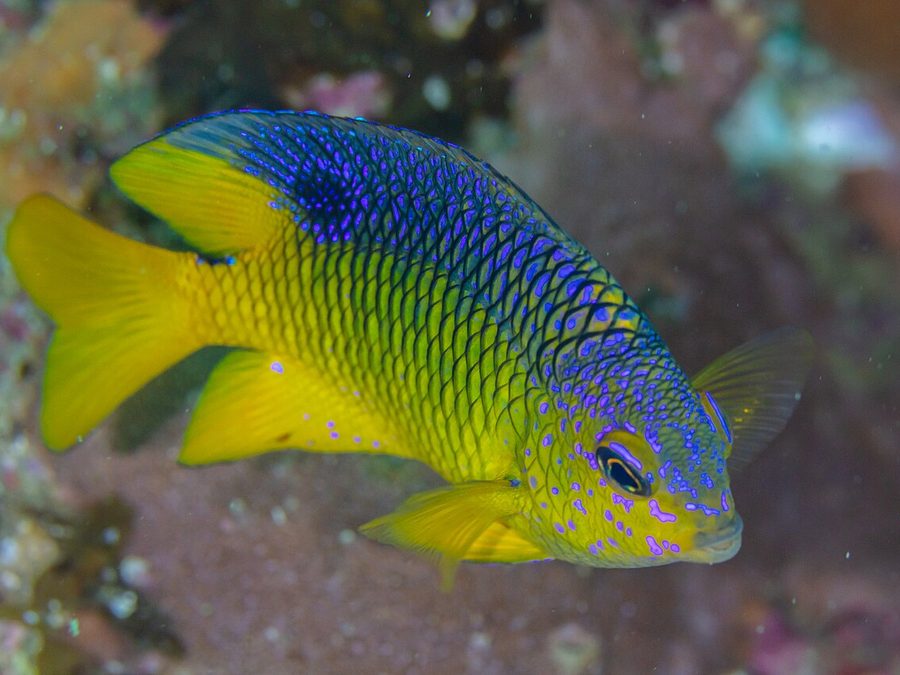
Beaubrummel
Stegastes flavilatus
A sharp two-tone damselfish — smoky gray above, washed yellow below. One of the more colorful of the small reef damsels.
5 fun facts →
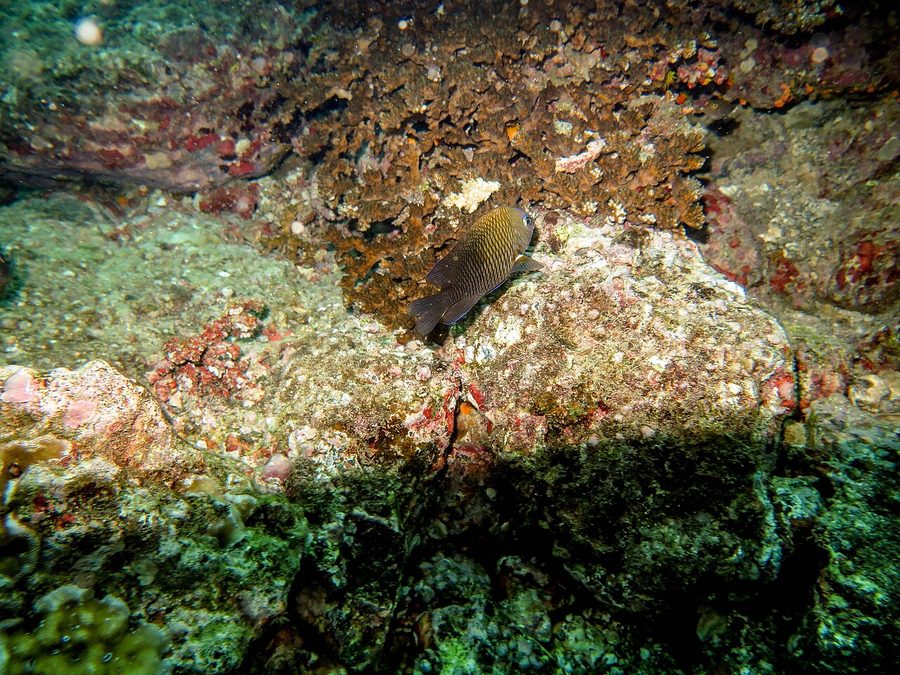
Acapulco Damselfish
Stegastes acapulcoensis
A dusky brown little defender that rarely leaves its scrap of reef. Plain-looking, but catch the light and you'll see blue flecks.
5 fun facts →
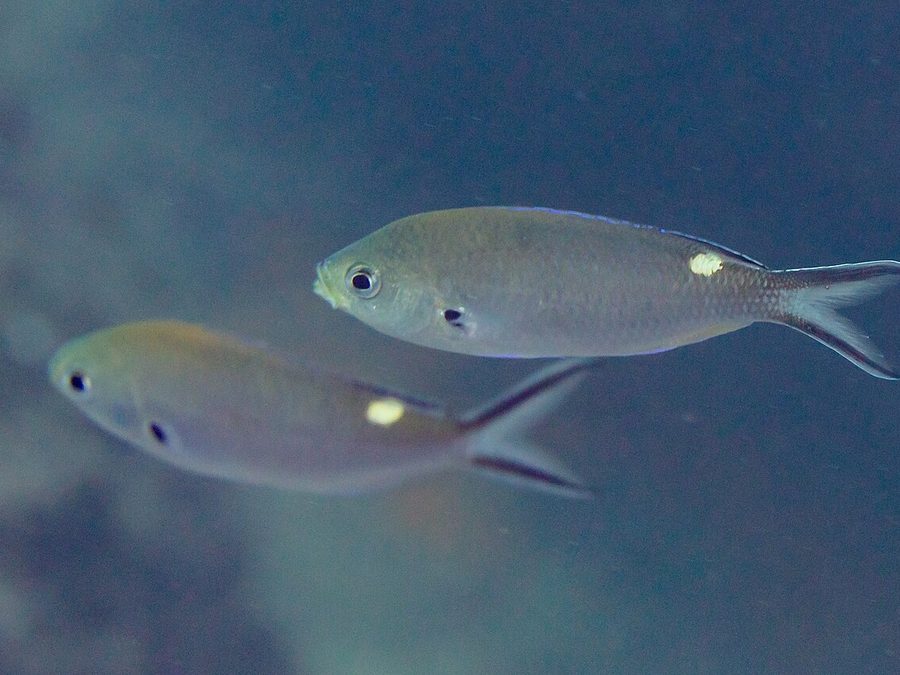
Scissortail Chromis
Azurina atrilobata
Small silvery damsels with a deeply forked tail that hover in shimmering midwater clouds, picking plankton from the current.
5 fun facts →
Representative photos of each Eastern Pacific species, via Wikimedia Commons under Creative Commons licenses (CC BY / CC BY-SA): Diego Delso and Ryan McMinds. What you actually see varies by day, season and tide.
5 · Heavy-Bodied / Big-Lipped Fish — groupers & sea bass
The thick-bodied ambush hunters of the reef — groupers that wait in the rocks, plus the schooling creolefish and the rock-perching giant hawkfish.
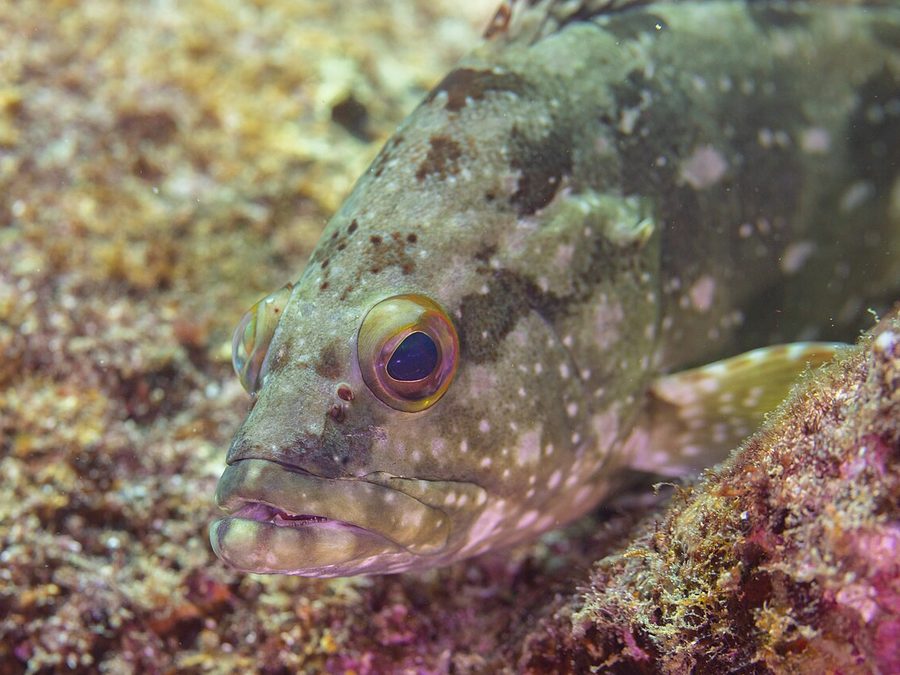
Flag Cabrilla
Epinephelus labriformis
A small, color-shifting grouper that waits motionless in the rocks to ambush its next meal. Can vanish against the reef in moments.
5 fun facts →
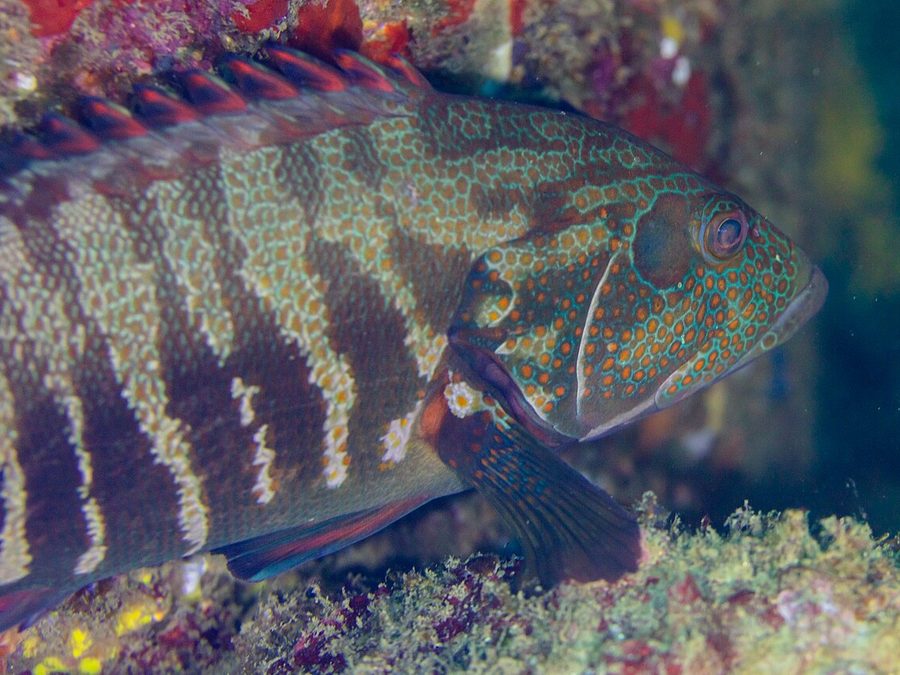
Panama Graysby
Cephalopholis panamensis
A small, shy grouper that tucks into caves and overhangs, rarely straying far from cover. Often seen peeking from a crevice.
5 fun facts →
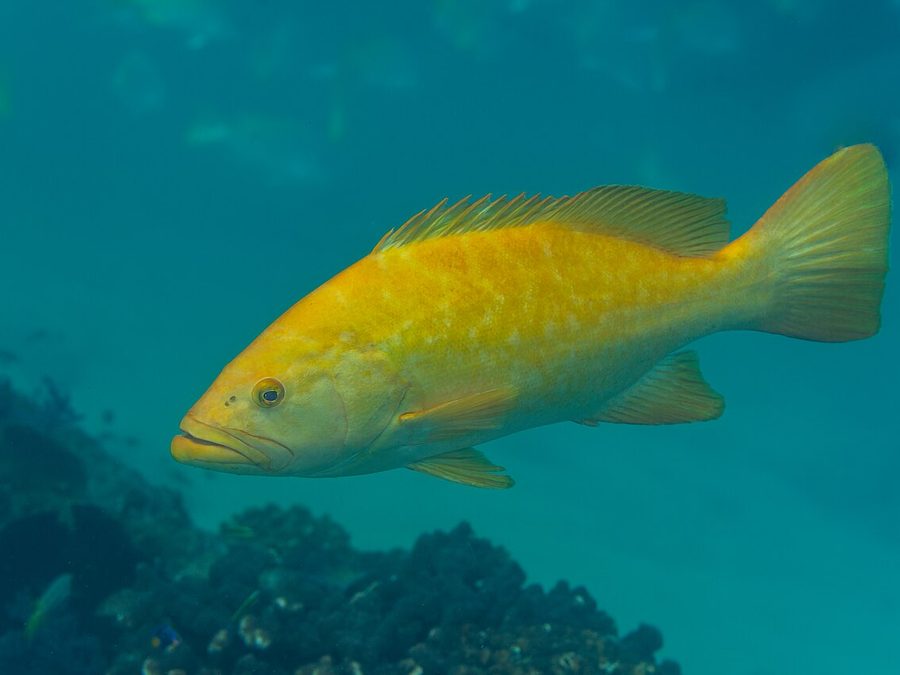
Leopard Grouper
Mycteroperca rosacea
A spotted reef hunter — and a lucky few turn vivid gold. The rare golden phase is a dramatic sight against the blue.
5 fun facts →
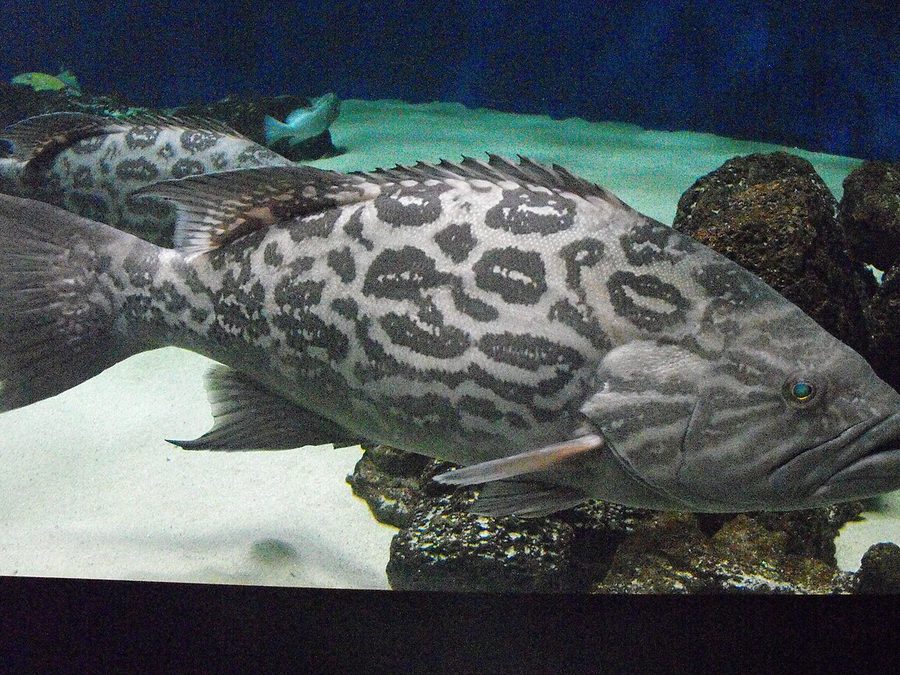
Broomtail Grouper
Mycteroperca xenarcha
A reef heavyweight with an unmistakable frayed, broom-like tail. Big ones hold near large rocks and deeper ledges.
5 fun facts →
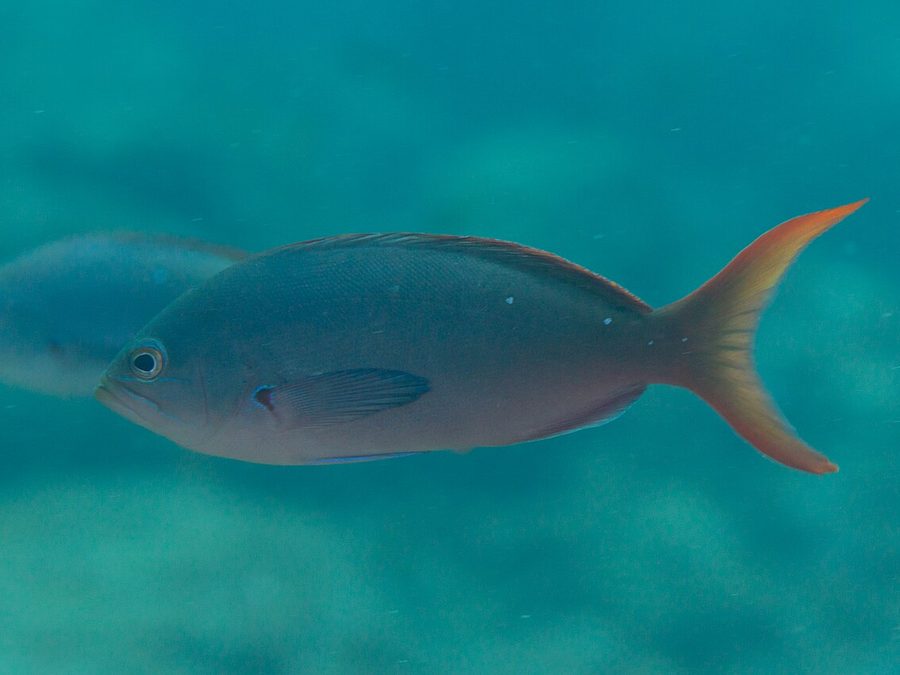
Pacific Creolefish
Paranthias colonus
A sea bass that schools in the open, drifting in rosy midwater clouds to pick plankton from the current.
5 fun facts →
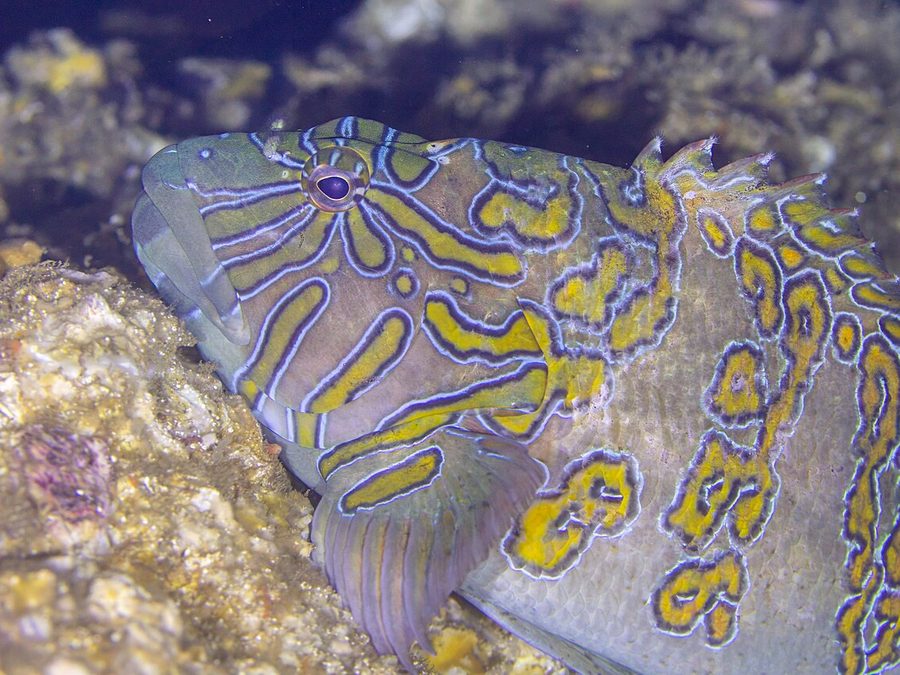
Giant Hawkfish
Cirrhitus rivulatus
The largest hawkfish — a stocky, marbled fish that perches on the rocks on its stiff fins, watching for a meal.
5 fun facts →
Representative photos of each Eastern Pacific species, via Wikimedia Commons under Creative Commons licenses (CC BY-SA / Public domain): Diego Delso and Stickpen. What you actually see varies by day, season and tide.
6 · Pectoral-Fin Swimmers — wrasses & parrotfish
The reef's fin-rowers — colorful wrasses that comb the rocks and sand, and the beak-mouthed parrotfish that graze the reef and help make white sand.
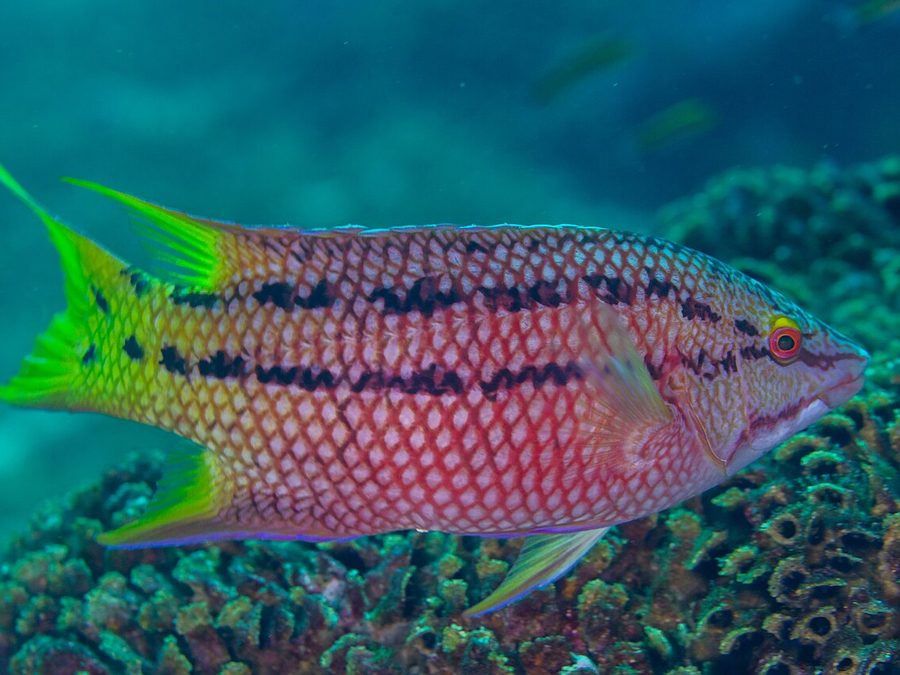
Mexican Hogfish
Bodianus diplotaenia
A large wrasse that changes color and shape through life — striped as a youngster, big and bump-headed as an old male.
5 fun facts →
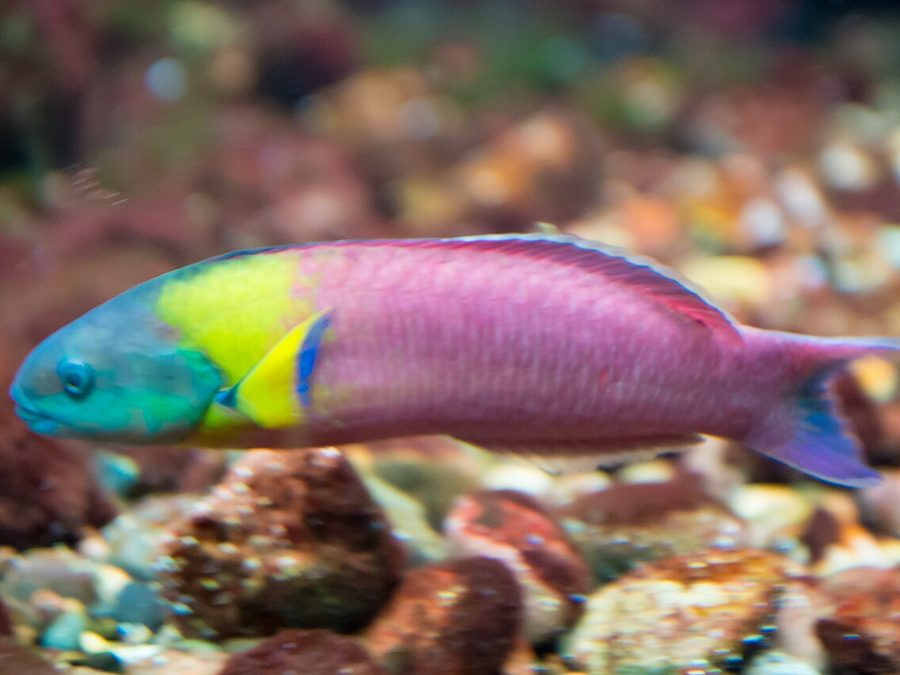
Cortez Rainbow Wrasse
Thalassoma lucasanum
A small, dazzling wrasse striped in red, yellow and blue-green that zips over the reef in busy groups.
5 fun facts →
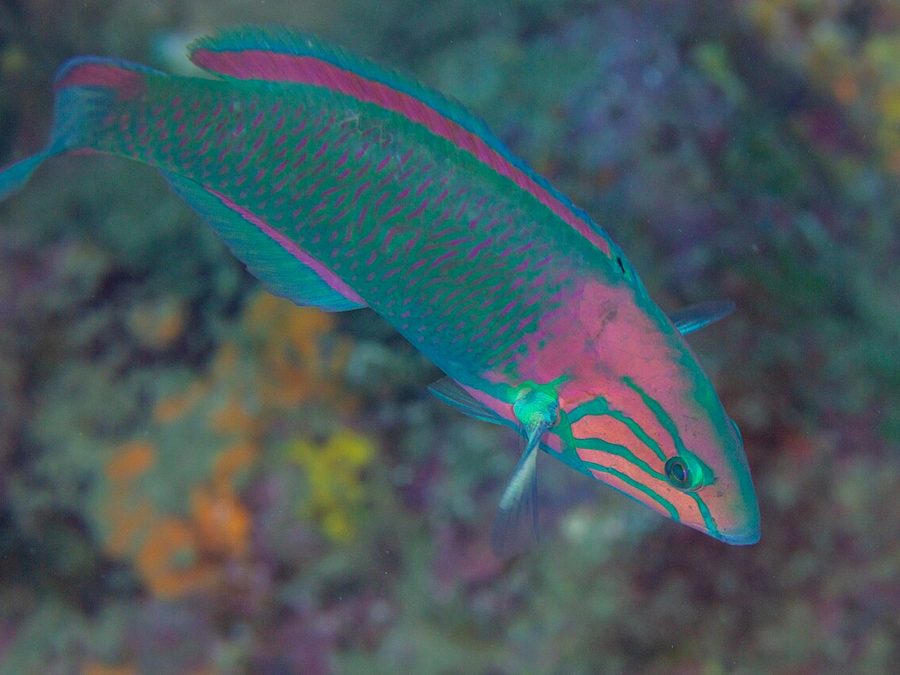
Sunset Wrasse
Thalassoma grammaticum
A green wrasse washed with pink and purple lines — a real looker when the light catches it over the reef.
5 fun facts →
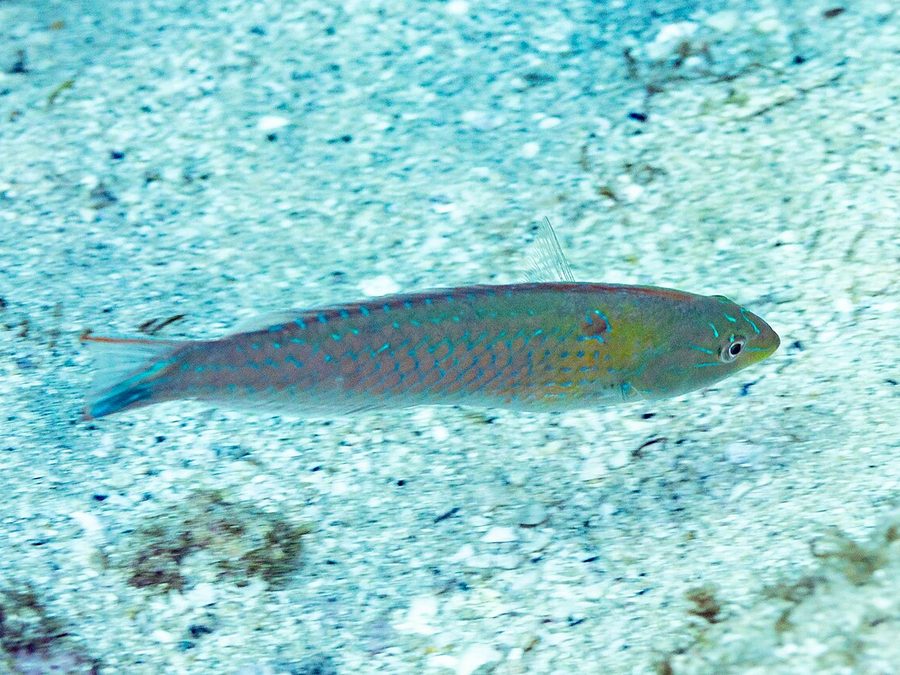
Chameleon Wrasse
Halichoeres dispilus
A slim, color-shifting wrasse that combs the sand by day and buries itself in the bottom to sleep at night.
5 fun facts →
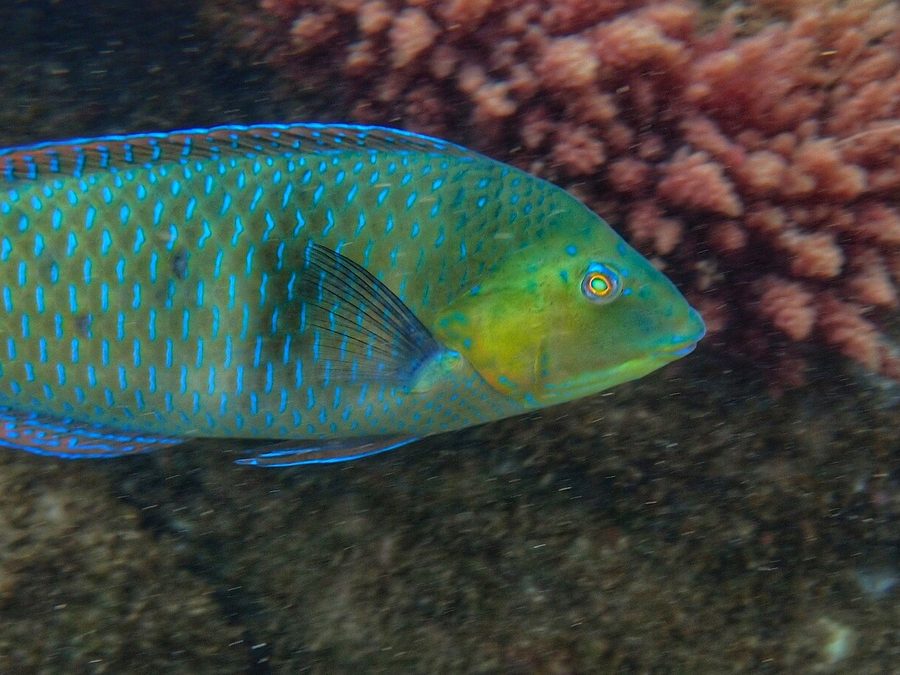
Spinster Wrasse
Halichoeres nicholsi
A big, boldly barred wrasse that patrols the reef edge and dives into the sand to hide at nightfall.
5 fun facts →
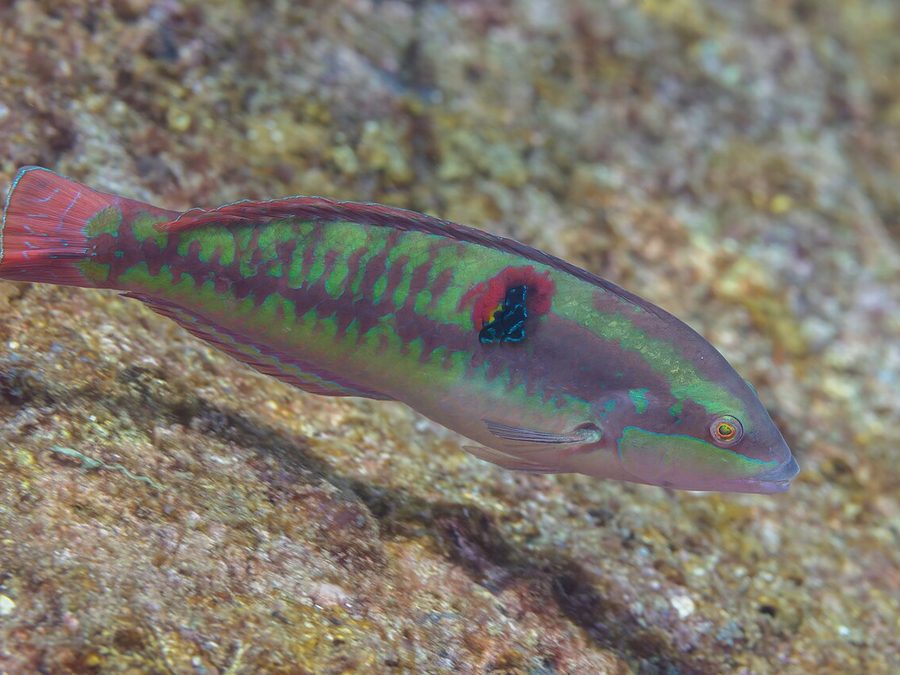
Wounded Wrasse
Halichoeres chierchiae
A small, quick wrasse named for the red blotches on the males that look like wounds — colorful, not hurt.
5 fun facts →
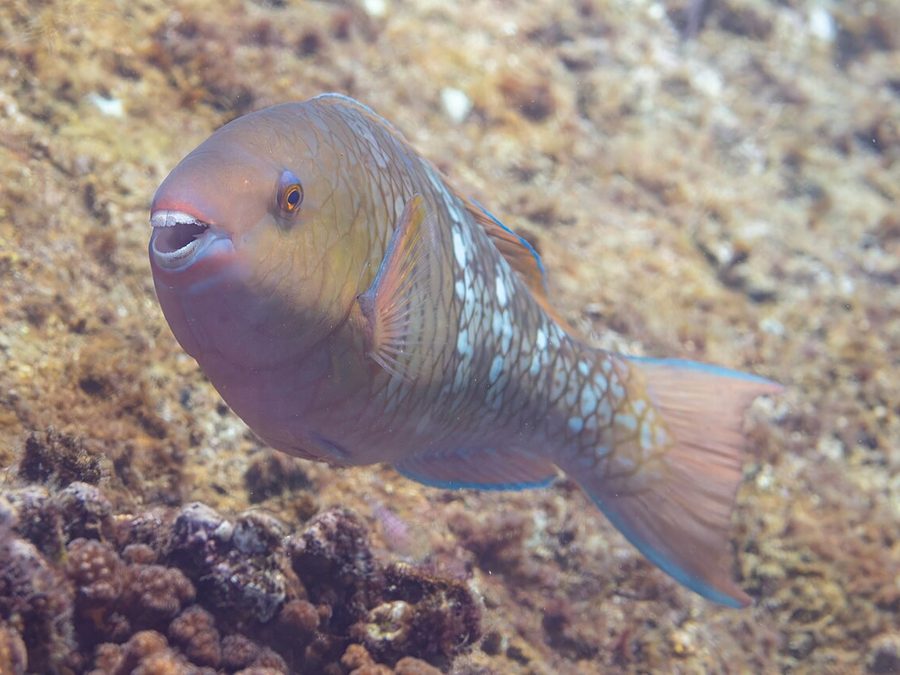
Parrotfish
Scaridae
The beak-mouthed reef grazers that scrape algae off the rock and help make white sand. We built a full guide to them.
Read the guide →
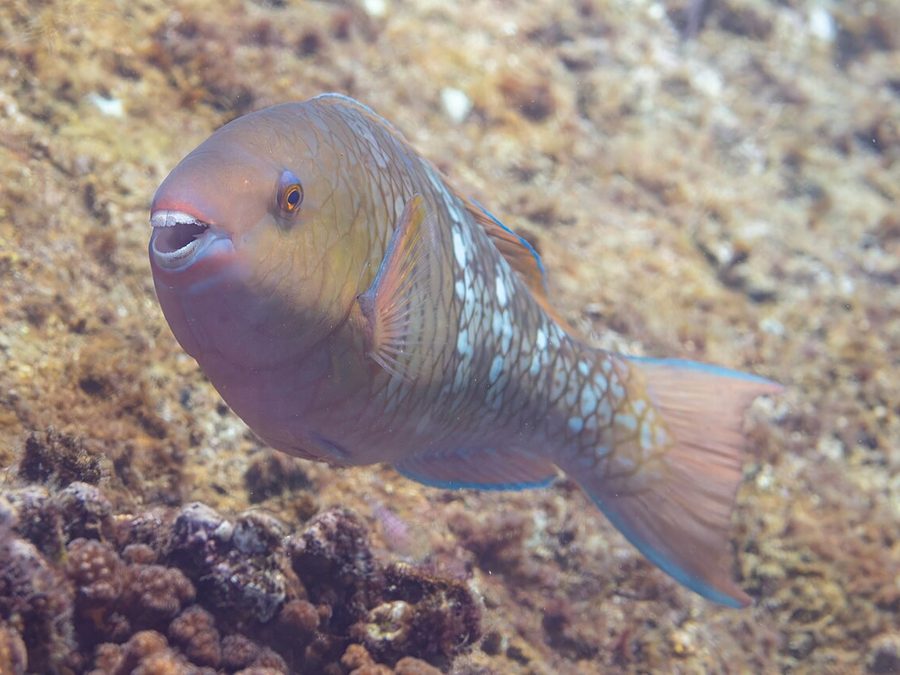
Bluechin Parrotfish
Scarus ghobban
A big, beak-mouthed grazer, blue-green with a bluish chin, that you can sometimes hear crunching at the reef.
5 fun facts →
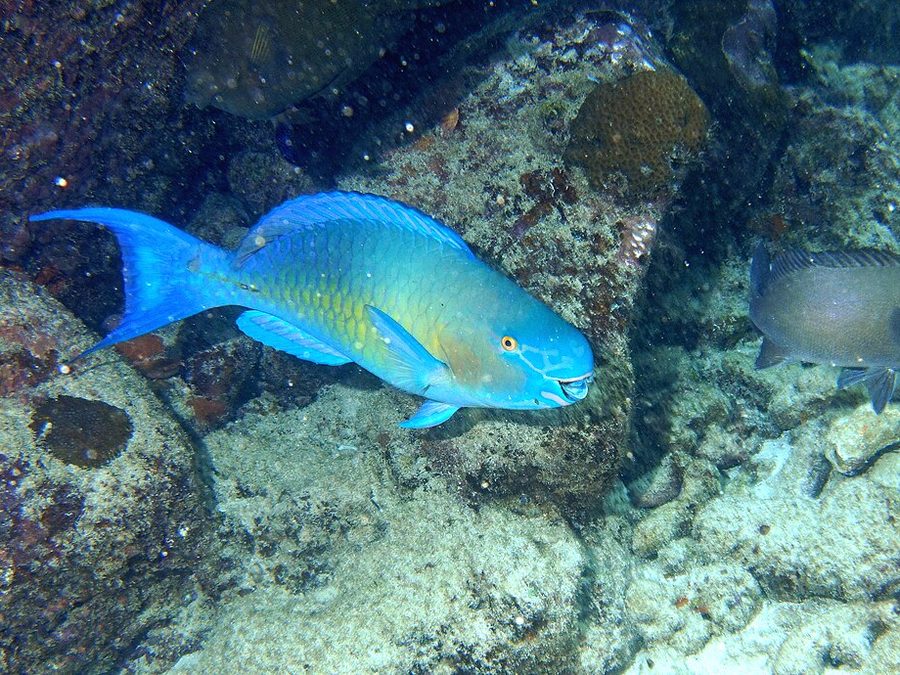
Bicolor Parrotfish
Scarus rubroviolaceus
A large two-tone grazer — darker in front, brighter behind — that scrapes the reef and helps build the beach sand.
5 fun facts →
Representative photos of each Eastern Pacific species, via Wikimedia Commons under Creative Commons licenses (CC BY / CC BY-SA): Diego Delso, mark6mauno, Alberto Alcalá and the Guido & Carrara family. What you actually see varies by day, season and tide.
More groups on the way
We're photographing and adding the rest of the Central Pacific's reef fish, group by group.
Come meet them in person
Our guided snorkel tour near Jacó gets you right up close — with professional photos included, so you keep the moment.
Book your snorkel tour Ask on WhatsApp