The giant manta ray is the largest ray in the ocean — a huge, harmless filter feeder that glides through the blue on wings that can span over twenty feet. Mantas roam Costa Rica's Pacific, mostly in deeper offshore waters, and an encounter is unforgettable. Here's what to know, plus five fun facts.
Giant Manta Ray · Mobula birostris
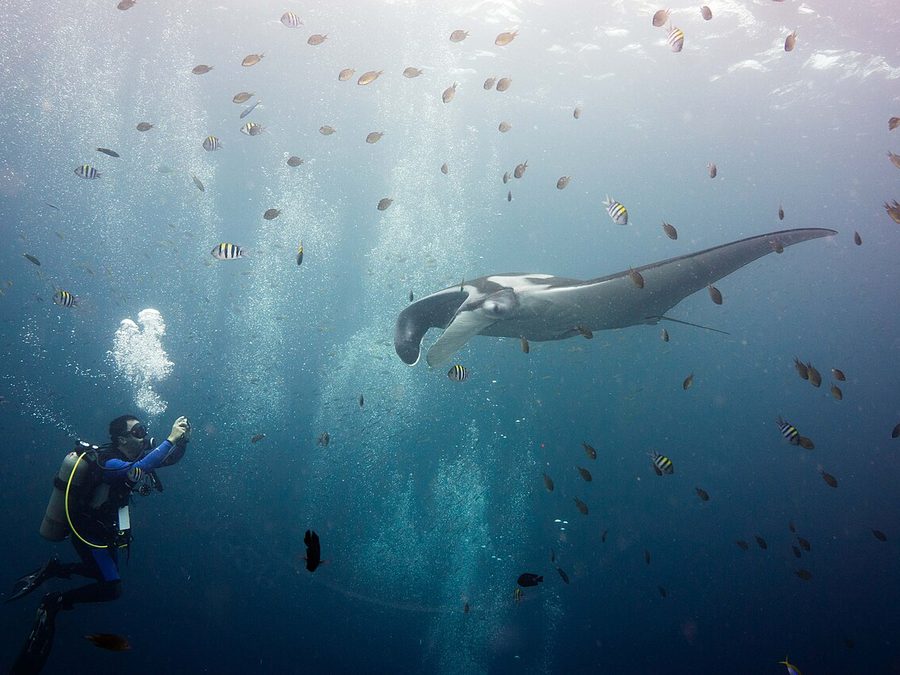
How to spot the giant manta ray near Jacó
Mantas live in open and offshore waters rather than along our shallow beach, so they're a rare, special sighting usually made on boat trips or deeper dives. If you're lucky enough to see one, there's no mistaking it: an enormous diamond of a ray, dark above and pale below, flapping slowly with two paddle-like fins curling near its mouth. Harmless, but always give it room.
5 fun facts about the giant manta ray
- Wings that span a bus. A big giant manta can measure more than twenty feet from wingtip to wingtip, making it the largest ray on earth.
- A gentle filter feeder. Despite its size it eats tiny plankton, funneling water through its huge mouth with two paddle-like head fins.
- Brainy for a fish. Mantas have one of the largest brains of any fish and show signs of curiosity and intelligence around divers.
- Everyone's unique. The spot pattern on each manta's belly is like a fingerprint, letting researchers identify individuals.
- Harmless to people. Mantas have no stinging spine and no interest in us — they simply soar by, which is exactly how we leave them, with plenty of space.
The giant manta ray is just one of many characters down there. See the whole cast in our Snorkel Jaco fish directory, or read real guest photos and reviews on the Snorkel Jaco reviews.
Come meet the giant manta ray
Book your snorkel tour online in a minute, or message us about what's been swimming around lately.
Book your snorkel tour Ask on WhatsApp