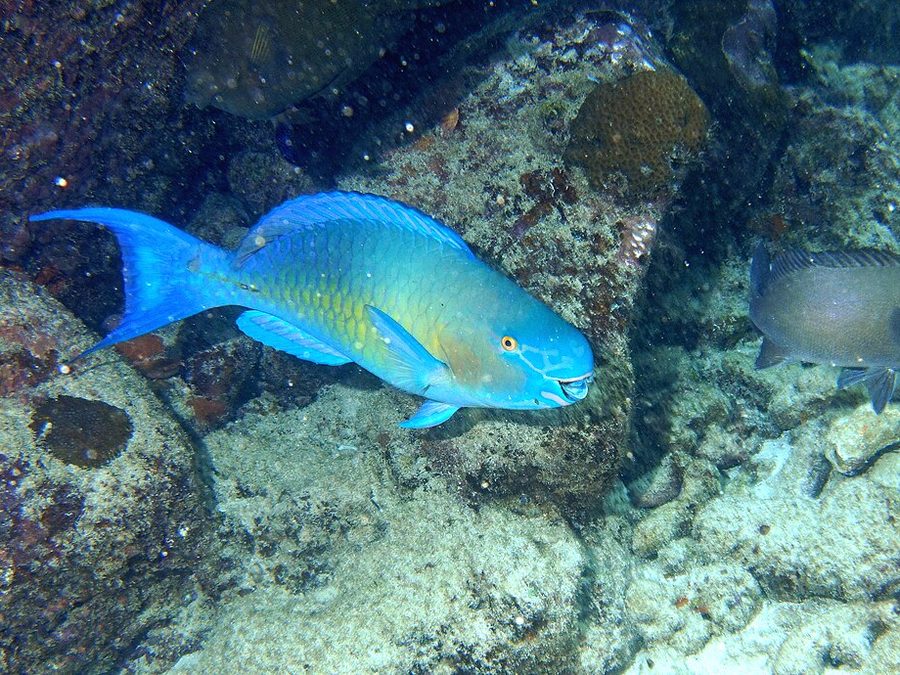
Dark in front and bright behind, the bicolor parrotfish — also called the ember parrotfish — is a big, beaked grazer that keeps the reef tidy. Here's how to spot it near Jacó, plus five fun facts.
Bicolor Parrotfish · Scarus rubroviolaceus
How to spot the bicolor parrotfish near Jacó
Look over rocky reef, where bicolor parrotfish graze along the bottom with their strong beaks. Terminal males are blue-green and often look two-toned, darker toward the head and brighter behind; females and younger fish can be reddish-brown. They cruise steadily, pausing to scrape the rock.
5 fun facts about the bicolor parrotfish
- Two-toned for a reason. Big males often show a darker front and brighter rear, the look that gives the 'bicolor' name.
- A beak made for scraping. Fused beak-like teeth let it rasp algae and coral right off the reef rock.
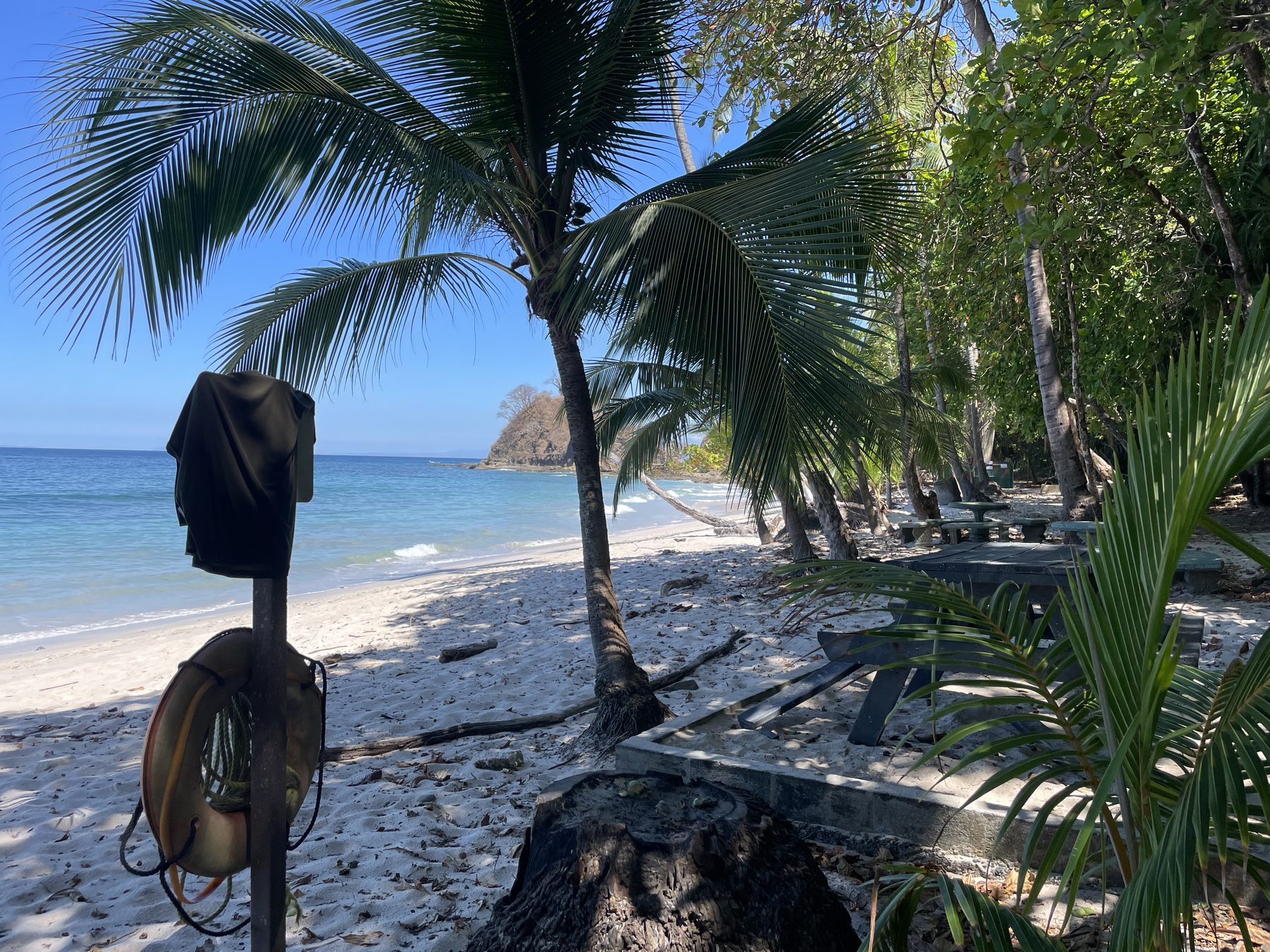
- A sand factory. By grinding up bits of reef, it helps produce the fine white sand that builds tropical beaches.
- Color phases and sex change. It passes through distinct color phases and can change from female to male as it grows.
- A wide-ranging grazer. Scarus rubroviolaceus ranges across the Indo-Pacific and into the Eastern Pacific, grazing rocky reefs here.
The bicolor parrotfish is just one of many characters down there. See the whole cast in our Snorkel Jaco fish directory, or read real guest photos and reviews on the Snorkel Jaco reviews.
Come meet the bicolor parrotfish
Book your snorkel tour online in a minute, or message us about what's been swimming around lately.
Book your snorkel tour Ask on WhatsApp