Sea turtles are one of the most awe-inspiring things a snorkeler can encounter — and yes, they genuinely do appear at Playa Mantas, the protected cove where our tours swim, about 25 minutes north of Jacó. It's not a guaranteed sighting every single tour, because these are wild animals moving on their own schedule. But it happens often enough that "will we see a sea turtle?" is one of the most common questions we get — and enough of our guests have floated face-to-face with one that we can say with confidence: it's genuinely possible, and the cove is ideal habitat for them.
Which sea turtle species appear at Playa Mantas?
The Pacific coast of Costa Rica is home to several sea turtle species, and the two most likely to turn up in the cove at Playa Mantas are the hawksbill turtle (Eretmochelys imbricata) and the green turtle (Chelonia mydas). Hawksbills are often spotted near rocky reef structures — exactly the kind of terrain the cove holds — where they forage for sponges among the boulders. Green turtles tend to cruise through open shallow water, their broad, rounded shells making them unmistakable even from the surface. Both species can be sizeable: a mature green turtle can measure well over a meter from tip to tail, and watching one drift past just below you is a moment that stays with people for years.
Neither species is a permanent resident of the cove; they pass through on their own routes, which is exactly what makes an encounter feel so special. You're not watching a captive animal. You're sharing the water with a wild sea turtle doing exactly what sea turtles do.
When and why do turtles appear here?
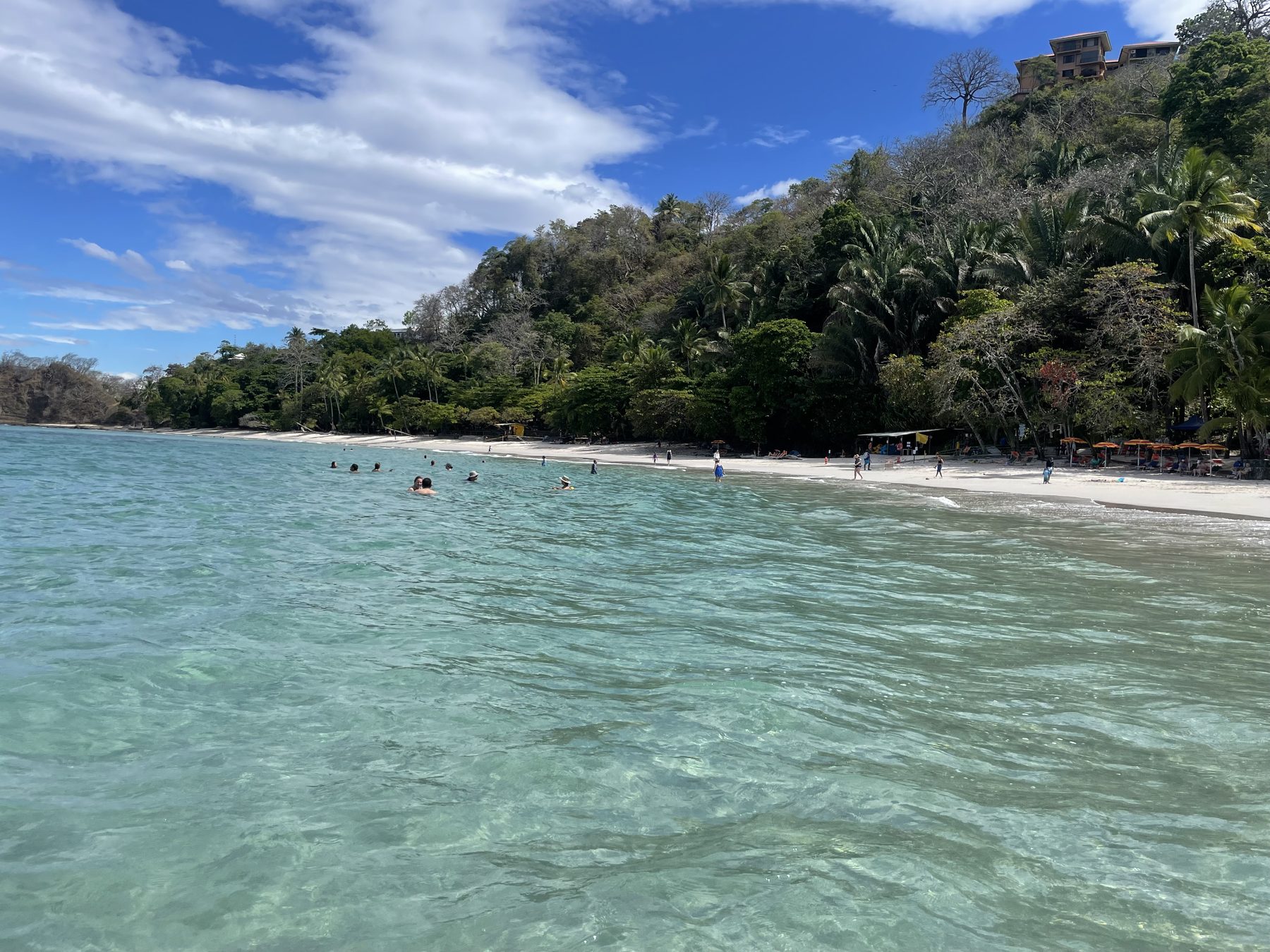
The cove at Playa Mantas sits in a headland-sheltered bay with calm, clear water and a mix of sandy bottom and rocky reef — that combination is prime feeding habitat for hawksbills. Sea turtles also need to breathe, and calm surface conditions mean they surface more predictably within view of snorkelers rather than diving deep to avoid chop. That's why calm, early-morning water gives you the best chance of an encounter.
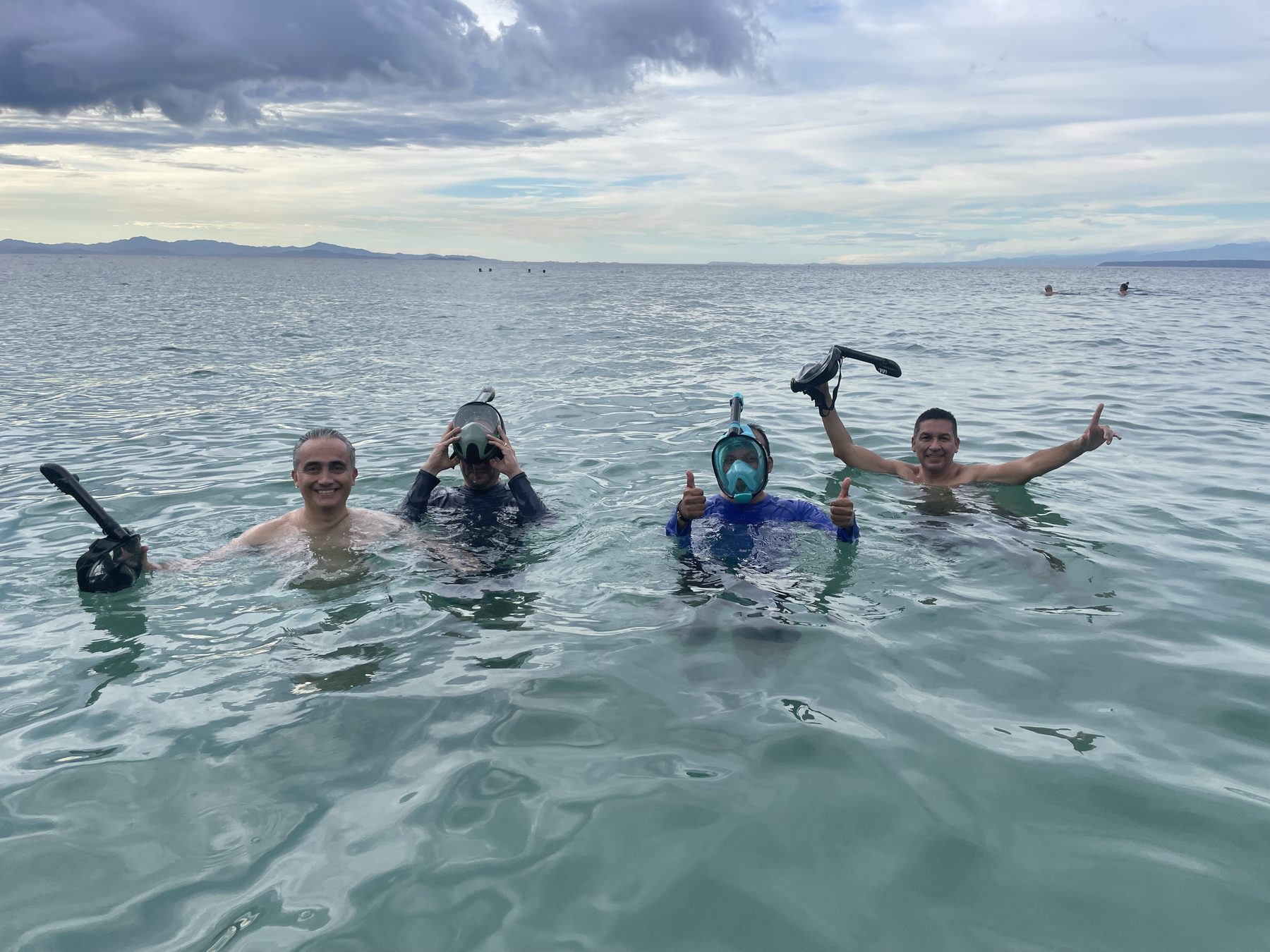
Turtle activity in the cove tends to be highest when the water is at its warmest and clearest — which, conveniently, overlaps with the green season (May through November) when morning water clarity is excellent. Early tours (our 8am slot) consistently report the best conditions: the cove is glassy, the sun is at a lower angle that reduces surface glare, and marine life in general is more active before midday heat peaks.
Why Playa Mantas cove is ideal sea turtle habitat
Not all snorkel sites near Jacó are created equal for wildlife encounters. Jacó Beach itself is exposed, surf-churned, and low-visibility — not the kind of place a reef-foraging hawksbill lingers. Playa Mantas is different. The headland that shelters the cove also creates a current break that allows fine sediment to settle, so water clarity there is consistently high. Rocky reef structures on both sides of the cove provide the sponge and algae growth that hawksbills feed on. The beach is rarely crowded, so there's minimal boat traffic or noise disturbance. All of this makes it a natural waypoint for turtles moving along the coast.
What you'll definitely see — sea turtle or not
Here's the honest truth: even on days when no turtle makes an appearance, the cove at Playa Mantas delivers. The reef here is alive with species you won't see on the main Jacó beach. Spotted eagle rays and manta rays glide through in the deeper sections of the cove. Moray eels — both green and jewel morays — poke their heads from crevices in the rocks. Pacific octopus are surprisingly common, their skin shifting color to match the reef as you hover above. Chocolate-chip sea stars dot the sandy bottom in brilliant orange and cream. Schools of sergeant majors, parrotfish, and blue-and-gold snappers swirl around the rocky structures.
Your guide knows where each species tends to be and will point them out as you swim — which means even a guest who's never snorkeled before will see far more than they'd find on their own. We also take free photos throughout the tour, so you don't need to hold a camera; just look.
Best tips for a sea turtle encounter
- Book the 8am tour. Early morning calm water and lower sun angle both improve your chances and your visibility.
- Move slowly and stay near the rocky edges of the cove. Turtles feeding on sponges hug the reef structure rather than crossing open sand.
- Don't chase. A turtle that feels crowded will dive and disappear. Hover still or drift slowly parallel — it may circle back toward you.
- Keep arms at your sides. Reaching out disrupts a turtle's path and stresses the animal. Watching from a respectful distance is both kinder and gets you a longer encounter.
- Trust your guide. They've logged hundreds of hours in this cove and know where to look. If a turtle is in the water, your guide will find it.
Tour details
Snorkel Jaco runs guided snorkel tours at Playa Mantas seven days a week. The tour costs $60 per person (low-season rate through December 15) and includes all gear (mask, snorkel, fins, and an optional life jacket), an in-water guide, and free photos. Tours run approximately 1.5 hours in the water. Playa Mantas is about 25 minutes north of Jacó — guests make their own way there (an Uber from central Jacó is easy and inexpensive), and we meet you at the beach. Three tour slots run daily: 8am, 10am, and noon. For sea turtle chances, the 8am slot is our consistent recommendation.
Ready to swim with sea turtles?
Book your snorkel tour at Playa Mantas for $60/person — gear, guide, and free photos included.
Book your snorkel tour Message on WhatsAppKeep reading: all the fish and marine life you can see at Playa Mantas, the best season for snorkeling near Jacó, or browse real guest reviews.
← Back to Snorkel Jaco