One of the most common questions we get before a tour: "What will we actually see?" It's a fair thing to wonder. Marine life doesn't follow a schedule, and any guide who promises you'll spot a specific animal on every single tour isn't being straight with you. What we can tell you is what comes up consistently at Playa Mantas — and the honest answer is: quite a lot. Here's a realistic picture of the marine life you're likely to encounter on a snorkel tour at Playa Mantas, 25 minutes north of Jacó.
Why Playa Mantas produces good sightings
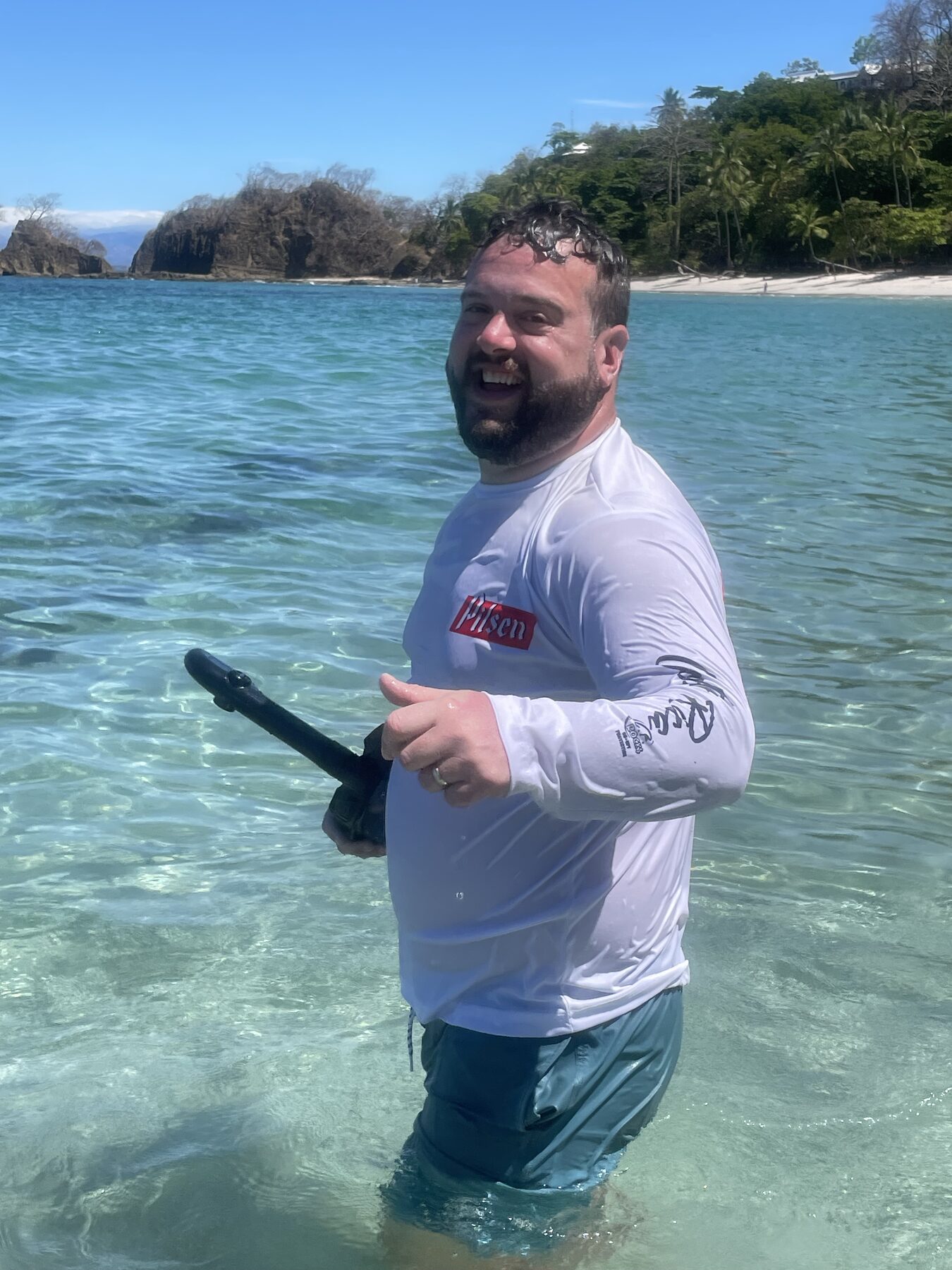
The short answer: structure and clarity. The cove sits between two rocky headlands, which creates a sheltered environment where sediment settles out quickly and visibility stays good. The bottom transitions from white sand to a mixed rocky reef, and that reef is where almost everything lives. Rocky outcroppings, crevices, and ledges give fish and invertebrates places to hide, hunt, and rest — which means there's always something to look at, in every direction.
On top of that, Bill — the owner and guide — has been running tours at this specific cove for four years, over 1,000 tours total. He knows which rocks the morays favor, where the octopus tend to settle in the afternoon, and which part of the reef the stingrays cruise across. Guests have said in their TripAdvisor reviews that Bill "knew the best place" — and that's exactly why the sightings here are consistently strong. You're not just floating around and hoping. You have a guide who knows where to take you.
The regulars: what shows up on most tours
These are the animals that come up on the majority of tours — not every single time, but reliably enough that you'd be surprised not to see at least a few of them:
- Parrotfish — big, colorful, and impossible to miss. They graze on algae and coral and are almost always present on the reef. Their beak-like teeth and iridescent scales make them one of the most striking animals you'll see.
- Sergeant majors — the bold black-and-yellow striped fish that swim in schools near the surface and will get surprisingly close to snorkelers. They're often the first thing first-timers see and they're everywhere.
- Moray eels — tucked into rock crevices with just their heads out, watching. They look dramatic but are entirely harmless when you don't bother them. Spotting a moray curled in a crevice is one of those moments guests love.
- Pufferfish — slow-moving and usually unbothered by snorkelers. Their round shape and spiky exterior make them easy to identify, and they're just plain fun to watch drifting along the reef.
- Sea stars — sitting on the sandy bottom or draped over rocks. A few species live at Playa Mantas, and they're a big hit with kids who have never seen one in the wild.
The exciting finds: when you're lucky
Beyond the regulars, Playa Mantas also produces some genuinely thrilling sightings on a regular basis — just not every single tour:
- Stingrays — resting half-buried in the sand between the rocky patches, or cruising slowly across the bottom. They're harmless if you give them space, and seeing one up close is a standout moment for most guests.
- Octopus — masters of camouflage. Bill has a good eye for spotting them tucked into rock pockets. When a guest sees one change color or jet away, it tends to be the thing they talk about for the rest of the trip.
- Snappers — yellow-and-silver fish that often hover in small groups near the structure. The Pacific dog snapper and yellow snapper both appear here regularly.
- Frogfish and scorpionfish — extremely well-camouflaged and extremely cool when you can find them. These sightings take some local knowledge to make happen, which is another reason to have Bill in the water with you.
The site: shallow, rocky, clear
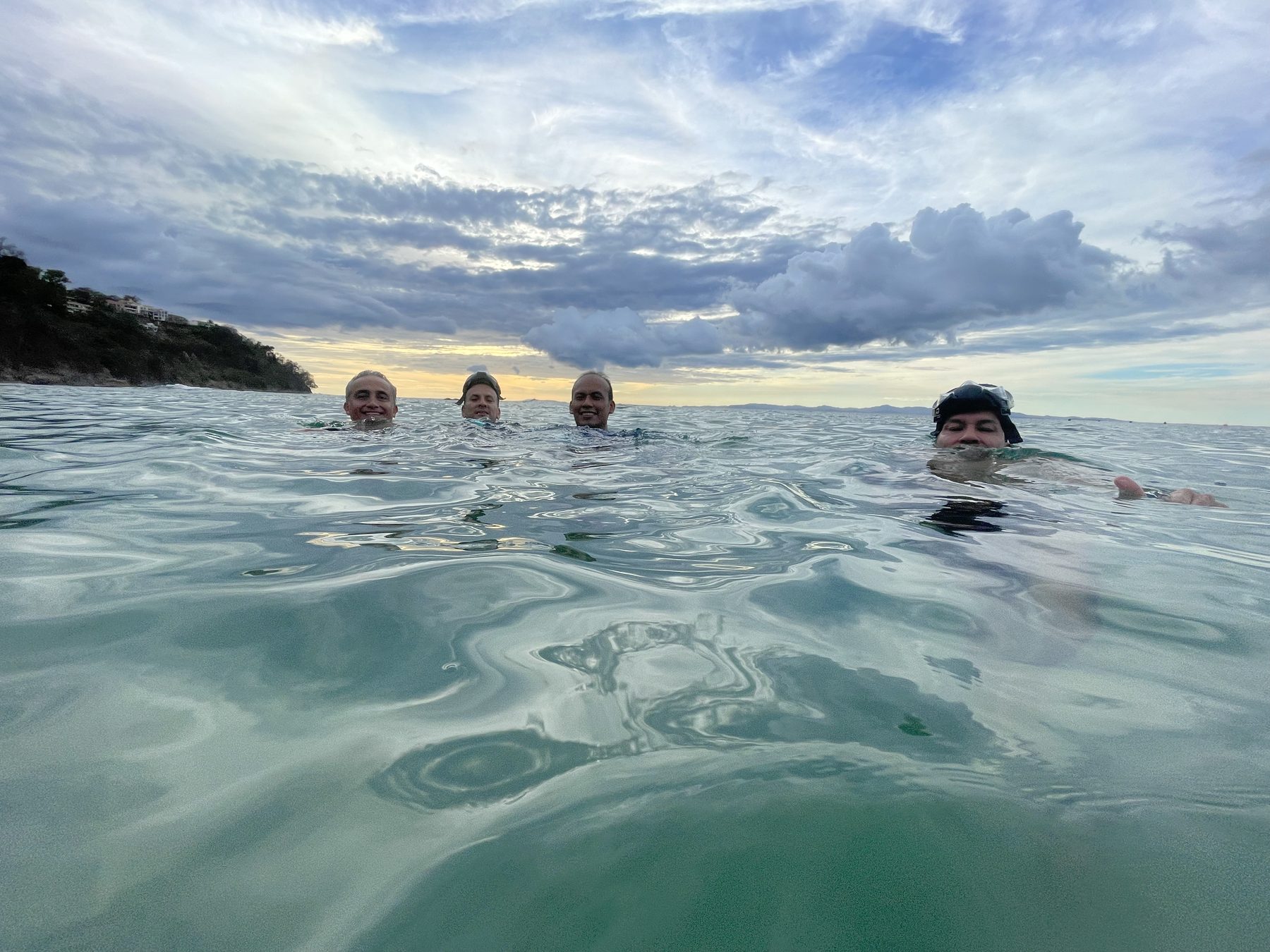
Playa Mantas is the only white-sand beach near Jacó, and the cove it sits in is genuinely calm — no surf, no surge, and water that stays clear enough to see the bottom even on overcast days. The reef runs from about knee-depth out to around 8 feet, which means the fish and invertebrates you're watching are right beneath the surface, not far below you. You don't need to dive down or free-dive to see anything. Just float, look down, and you're in the middle of it all.
The tour is about 1.5 hours in the water. That's enough time to work through the different sections of the reef, let the guide point things out as you go, and still have energy left for the rest of your day. Gear, guide, and photos are all included in the $70/person price ($60 in green season, Oct 1–Dec 15).
Come see for yourself
Book a snorkel tour at Playa Mantas — gear, guide, and free photos included. $60/person now through December 15.
Book your snorkel tour Book on WhatsAppFor deeper dives on individual species: browse our full marine life directory for Jacó, Costa Rica. Or read more about where to find good snorkeling near Jacó Beach. You can also check out TripAdvisor reviews from real guests who describe exactly what they saw on their tours.
← Back to Snorkel Jaco